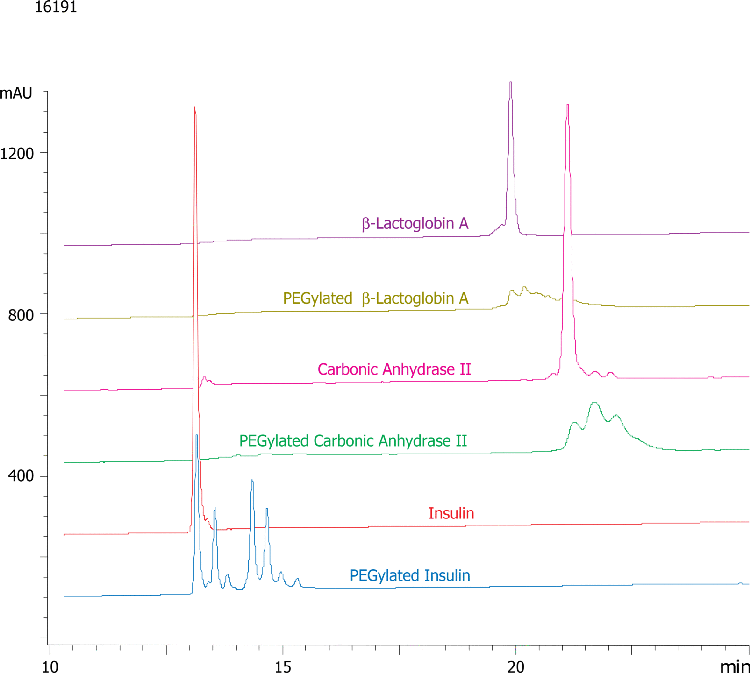
Overlay of PEGylated vs. Native Proteins on Jupiter® 300 C4 Column
LC Conditions
Column
Jupiter 5 um C4 300 A,LC Column 150 x 4.6 mm,Ea
Brand
Jupiter
Part No
00F-4167-E0
Phase Name
C4
Elution Type
Gradient
Mobile Phase
A: 0.1% TFA and 2% ACN in Water
B: 70/20% ACN/IPA, 0.08% TFA in Water
Gradient Profile
Step No.
Time(min)
%A
%B
1
0
85
15
2
25
30
70
Flow Rate
1.00 mL/min
Temperature
45°C
Detection
UV-Vis Abs.-Variable Wave.(UV) @ (22°C)
Detection Info
Sample Notes
Application Focus: Using Jupiter 300 C4 for purifying PEGylated proteins. For many protein therapeutics, a polyethylene glycol (PEG) group is attached to a protein to increase its serum half-life. This addition of such PEG groups to a protein complicates both the characterization and purification of such PEG/protein conjugates away from the "non-PEGylated" protein species. This application is show the utility of reversed phase chromatography for purifying PEGylated proteins. Different protein solutions in PBS (pH 7.4) was reacted with an excess of the PEGylation reagent dissolved in DMSO (Methyl-PEO12-NHS Ester) and incubated in an ice bucket for up to two hours Reaction mixture was quenched with an equal volume of 50 mM Tris/1 % trifluoroacetic acid (TFA) (pH~2). As mentioned in App ID# 16198, the PEGylation reaction concurrently occurs rapidly at several different protein sites in a fixed ratio. In every protein tested there was always more than one PEGylated protein peak observed by reversed phase HPLC; each seemingly ascribed to a different site of PEG modification. Unlike gel filtration which only separates PEGylated proteins by degree of modification, it appears that protein modification site influences the reversed phase separation of proteins much more than the degree of modification; such results show the utility of using reversed phase chromatography for purifying and analyzing various PEGylated proteins.
Order Items Used in This Application
- 1. PEGylated vs. Native Proteins
Similar Applications
No Similar applications found.