Multiclass Antibiotics Screening of Kidney Juice, Serum, Milk and Honey by LC/MS/MS
LC Conditions
Column
Gemini 3 µm C18 110 Å, LC Column 50 x 2 mm, Ea
Brand
Gemini
Part No
00B-4439-B0
Phase Name
C18
Elution Type
Gradient
Mobile Phase
A: Water + 0.1% Formic Acid
B: Methanol + 0.1% Formic Acid
Gradient Profile
Step No.
Time(min)
%A
%B
1
0
98
2
2
7.27
20
80
3
7.37
1
99
4
11
98
2
5
15
98
2
6
11
98
2
7
15
98
2
Flow Rate
0.50 mL/min
Temperature
40°C
Detection
Tandem Mass Spec (MS-MS) @ (600°C)
Detection Info
Sample Notes
Sample Prep Steps: 1. Weigh 1 g of homogenized beef kidney sample, kidney juice, or serum into a 50 mL FEP (fluorinated ethylene propylene) tube. Alternatively you can use a disposable polypropylene Corning tube. 2. Add 5 µL of the internal standard work solution. 3. Add 2 mL of water and 8 mL of acetonitrile 4. Mix briefly using a vortex mixer, and then shake for five minutes. 5. Centrifuge at 3450 rcf for five minutes. 6. Decant the supernatant into a 50 mL tube with 500 mg of Sepra C18-E sorbent. 7. Mix briefly using a vortex mixer and shake for 30 seconds. 8. Centrifuge at 3450 rcf for one minute. 9. Place a 5 mL aliquot of the supernatant into a graduated tube. 10. Evaporate down to less than 1 mL. 11. Make up the volume to 1 mL with water. 12. Filter the extract through a 0.45 µm Phenex™ RC syringe filter (part no. AF0-8103-12) and then transfer to a Verex™ autosampler vial (part no. AR0-9925-13). Note: The extracts are now ready for LC/MS/MS analysis. SecurityGuard™ Guard Cartridge System extends column lifetime. - SecurityGuard Cartridges, Gemini C18 4 x 2.0mm ID, 10/Pk Part No.: AJ0-7596 - Holder Part No.: KJ0-4282
Order Items Used in This Application
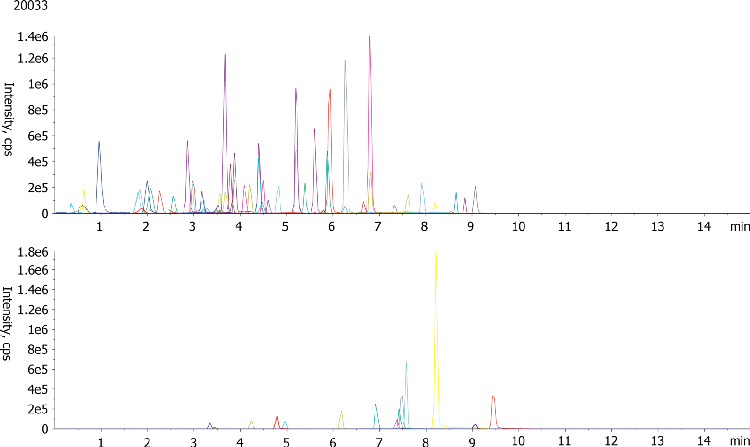
- 1. Florfenicol amine
- 2. Sulfanilamide
- 3. Sulfaguanidine
- 4. Tetramisole
- 5. Amoxicillin
- 6. Sulfacetamide
- 7. Lincomycin
- 8. Metronidazole
- 9. Dimetridazole
- 10. Albendazole amino sulfone
- 11. Ronidazole
- 12. Minocycline
- 13. Sulfadiazine
- 14. Thiabendazole
- 15. Sulfathiazole
- 16. Sulfapyridine
- 17. Desethylene ciprofloxacin
- 18. Ractopamine
- 19. Ofloxacin
- 20. Sulfamerazine
- 21. Enoxacin
- 22. Tetracycline
- 23. Norfloxacin
- 24. Ampicillin
- 25. Ciprofloxacin
- 26. Thiamphenicol
- 27. Lomefloxacin
- 28. Enrofloxacin
- 29. Oxytetracycline
- 30. Danofloxacin
- 31. Orbifloxacin
- 32. Difloxacin
- 33. Sarafloxacin
- 34. Sulfamethazine-d4
- 35. Sulfamethazine
- 36. 2-mercaptobenzimidazole
- 37. Sulfamethizole
- 38. Ipronidazole-OH
- 39. Sulfamethoxypyridazine
- 40. Spiramycin
- 41. Chlorotetracycline
- 42. Sulfachloropyridazine
- 43. Sulfamethoxazole
- 44. Florfenicol
- 45. Sulfadoxine
- 46. Clindamycin
- 47. Tilmicosin
- 48. Sulfisoxazole
- 49. Carbadox
- 50. 6-phenyl-2-thiouracil
- 51. Albendazole sulfoxide
- 52. Chloramphenicol
- 53. Doxycycline
- 54. Bacitracin
- 55. 2-Quinoxalinecarboxylic acid
- 56. Oxolinic acid
- 57. Sulfadimethoxine
- 58. Albendazole sulfone
- 59. Erythomycin
- 60. Sulfaquinoloxaline
- 61. Tylosin
- 62. Fenbendazole sulfoxide
- 63. Josamycin
- 64. Fenbendazole sulfone
- 65. Albendazole
- 66. Flumequine
- 67. Sulfanitran
- 68. Ceftiofur
- 69. Mebendazole
- 70. Oxyphenbutazone
- 71. Fenbendazole
- 72. Ketoprofen
- 73. Penicillin G
- 74. Naproxen
- 75. Phenylbutazone
- 76. Flunixin
- 77. Nicarbazin
- 78. Etodolac
- 79. Dipyrone
- 80. Cloxacillin
- 81. Ibuprofen
- 82. Diclofenac
- 83. Indomethacin
- 84. Triclabendazole
- 85. Tolfenamic acid
- 86. Novobiocin
- 87. Niclosamide
- 88. Decoquinate
- 89. Sulfasalazine
- 90. Monensin
- 91. Narasin
- 92. Lasalocid
- 93. Lasalocid
- 94. Rafoxanide
Similar Applications
No Similar applications found.