Phenex Polytetrafluoroethylene (PTFE) Syringe Filters
PTFE Syringe Filter: The Optimal Choice for 100% Organic Solutions
PTFE (Polytetrafluoroethylene) is an inherently hydrophobic membrane excellent for the filtration of organic-based, highly acidic or basic samples and solvents. Widely used in chromatography, it is especially well- suited for the clarification of non-aqueous samples. Although this membrane is hydrophobic, it can be made hydrophilic by wetting the membrane with alcohol and then flushing it with deionized water.

Phenex-PTFE Filter
PTFE filters, made from polytetrafluoroethylene, are specialized filtration devices known for their exceptional chemical resistance and hydrophobic properties. They are widely used across various industries due to their ability to filter aggressive chemicals and solvents effectively.
Why is PTFE effective for filtering organic solutions?
PTFE is hydrophobic due to its molecular structure, specifically the strong carbon-fluorine bonds and the resulting low surface energy that makes it highly chemically compatible with nonpolar solvents.
Application of Polytetrafluoroethylene (PTFE) Syringe Filters
HPLC Sample Preparation: Efficient filtration of samples, offering high chemical resistance to strong solvents.
- Chemical Filtration: Effectively handle aggressive reagents such as strong acids bases, and solvents for precise chemical analysis.
- Environmental Testing: Aid in testing of environmental samples by efficiently capturing particulate matter.
- General Lab Filtration: Provide clarity by removing insoluble impurities from liquid samples.
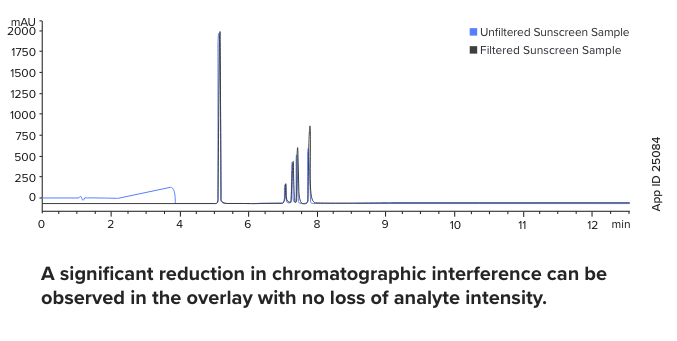
Analysis of Aromatic Active Ingredients Contained in a Commercially Available Topical Sunscreen
Sample Preparation
- A sample of sunscreen was dissolved in 10 mL of reagent grade ethanol.
- The sample was vortexed and centrifuged (@ 4700 rpm)
- Filter it through a Phenex PTFE 0.45 µm Syringe Filter (Part No.: AF0-1102-52)
Clean up and Filtration of Topical Sunscreen
LC Conditions
2. Octisalate
3. Homosalate
4. Avobenzone
5. Oxycrylene
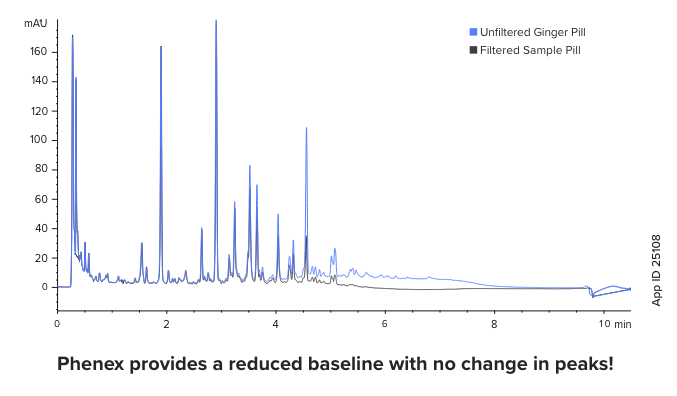
Optimized Filtration of Ginger Formulation Pills Using Phenex PTFE Syringe Filters and Kinetex 2.6 µm Biphenyl LC Column
Sample Preparation
- Dissolve a Gaia® Supreme Ginger Pill in 10 mL of Methanol/Water (80:20) into a Verex™ Vial
- Filter it through a Phenex PTFE 0.45 μm Syringe Filter (Part No.: AF0-1102-52)
Ginger Pill Sample Filtered by A Phenex PTFE Syringe Filter
LC Conditions
Sugar Analysis from Animal Feed using Luna Omega SUGAR LC Columns
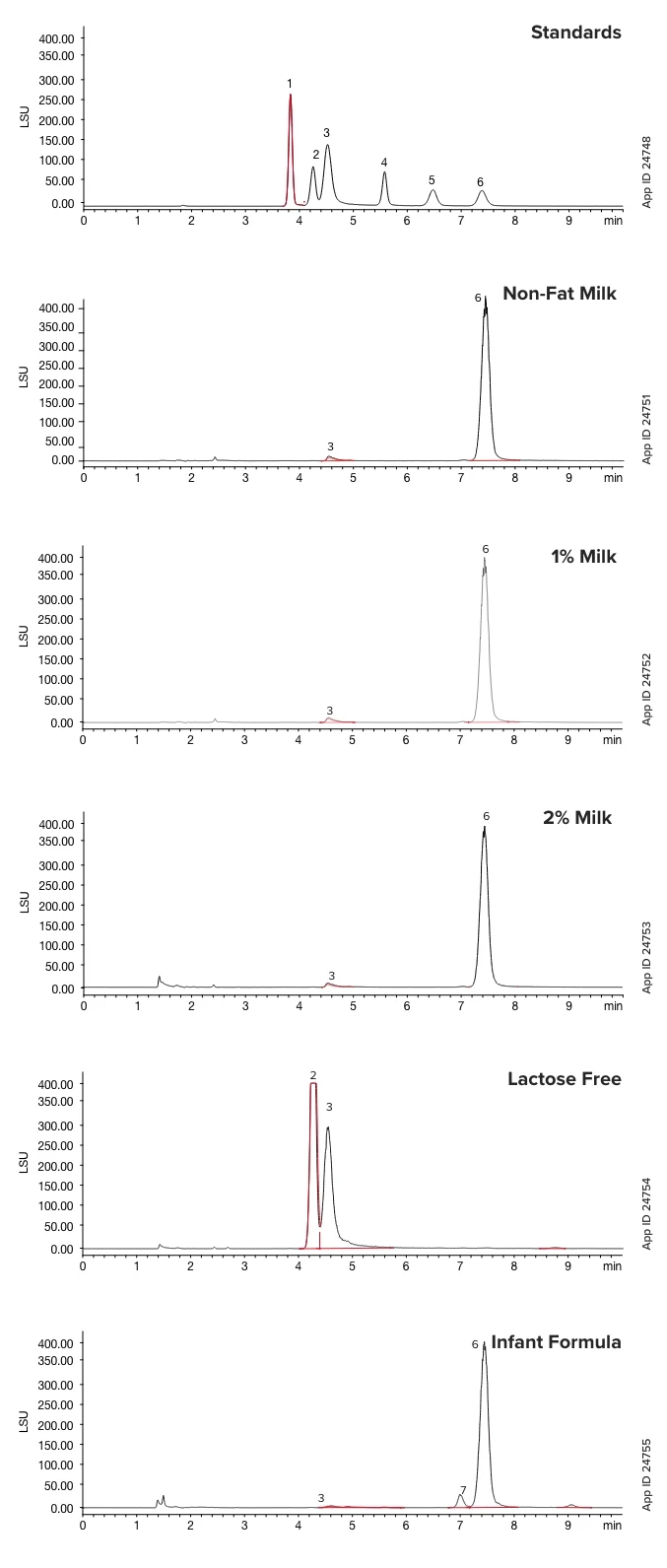
Evaluating the sugar content of animal feed is important for providing proper nutrition and strong animal performance. Using the Luna Omega SUGAR column, the six sugars were fully resolved with better than baseline resolution. The gradient method also resolved an interference peak near fructose on the horse feed sample.
Sample Preparation
- Grind animal feed with a spice grinder, or similar, until homogenous.
- Weigh out 1 g of sample into a centrifuge tube.
- Add 25 mL of 50:50 ethanol/water to the tube.
- Shake the tube on a shaker for 1 hour at room temperature.
- Bring up to 50 mL with 50:50 ethanol/water and invert to mix.
- Centrifuge for 15 minutes at max rpm.
- Filter supernatant with a 0.45 µm PTFE syringe filter followed by a 0.2 µm PTFE syringe filter. (0.2 µm filtration step was to ensure no clogging of the UHPLC system. 0.45 µm filtration may be sufficient for HPLC systems.)
LC Conditions
B: Acetonitrile/Isopropanol/Water (90:5:5)
2. Glucose
3. Galactose
4. Sucrose
5. Maltose
6. Lactose
Not sure how to select the right PTFE filter for your analysis? Check out our Phenex Syringe Filter Selection Guide for detailed guidance based on your sample type, solvent, and application needs.
Ready to order? Explore our full range of Phenex PTFE syringe filters and find the right fit for your workflow.
Other Applications
PTFE |
* Removal of high particulate matter with a glass fiber prefilter is critical before any drug, tox, or dirty environmental sample is filtered to ensure the highest syringe filter membrane performance.
** For high load and particulate-laden samples you may consider placing a Glass Fiber (GF) prefilter, either integrated with the membrane as one unit (Phenex- GF/NY or -GF/CA) or in series with the membrane syringe filter of your choice. Generally, 0.45 μm porosity filters are used to remove particulates from samples and mobile phase solutions. For sterile-filtration, a 0.20 μm porosity filter can be used.