Phenogel GPC Columns

Enhance Resolution for Polymer Analysis using Non-Aqueous GPC/SEC
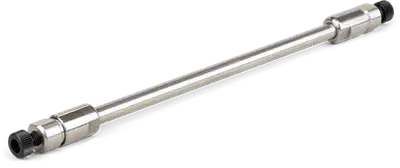
Phenogel size exclusion columns for gel permeation chromatography (GPC) are composed of highly cross-linked styrene-divinylbenzene (SDVB) and achieve high resolution and tight linear calibration curves. Phenogel GPC columns are available in seven different pore sizes, ranging from 50 Å to 106 Å; and a linear bed configuration. Pore size distribution and pore volume are closely controlled parameters in the manufacturing process, accounting for high resolution, tight linear calibration curves, and excellent column-to-column reproducibility. USP L21 packings available.
- 5 and 10 µm particle sizes
- Narrow bore (4.6 mm ID) solvent-saver columns available
- Highly cross-linked for mechanical and chemical stability
- Temperature stable to 140 °C.
Order
Product Finder
Overview
Use Phenogel GPC Columns for Separations of Low, Moderate, and High Molecular Weight:
- Organic-soluble polymers
- Plastics and plasticizers
- Rubbers, resins, and elastomers
- Pharmaceutical excipients
- Food and cosmetic excipients
- Textiles/dyes
- Petroleum and fuels
- Oils, lipids, and fatty acids
- Sample cleanup by GPC
Phenogel Non-Aqueous GPC/SEC Columns
Phenogel packing materials are made from styrene-divinylbenzene by emulsion polymerization under conditions to optimize pore size, total pore volume, particle size, and degree of cross-linking. The results yield gel permeation chromatography (GPC) materials that provide very high resolution, rugged durability, and wide solvent compatibility.
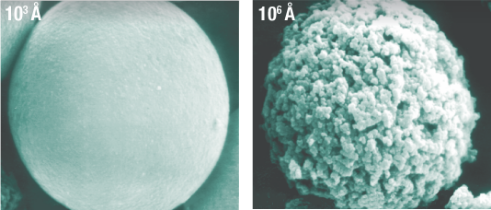
SEM Photos of Phenogel Polymer Beads
Solvent and Temperature Compatibility
Solvent Selection Table
Although styrene-divinylbenzene materials are exceptionally inert, interaction between the column packing and sample materials (especially very polar solutes) occasionally occurs and the mobile phase must be modified to eliminate this effect. Phenogel columns can tolerate up to 0.1&thinlow MW amines, 0.5% glacial acetic acid, or up to 1% water in the mobile phase as modifiers.
Phenogel columns are temperature stable to 140 °C which is important for applications involving solutes with limited solubility at ambient temperatures, or where solubility considerations demand the use of viscous solvents such as DMF or DMSO. At higher temperatures, eluent viscosity is decreased and mass transfer is enhanced, with the effect of increasing sample resolution. This temperature stability is particularly useful when analyzing polymers such as polyethylene and polypropylene which require higher temperatures.
*HFIP (hexafluoroisopropanol) allows polymers such as polyamides and PET that are analyzed at a temperature of 135 °C and higher to be analyzed at temperatures below 100 °C. The narrow particle distribution of Phenogel columns eliminates the problem of overlapping peaks and band broadening that is typically associated with using this solvent with traditional GPC columns.
Solvent Compatibility Table
& Mixed
Operating Temp.
*Not recommended on 5 µm 50 Å columns.
N = Not Compatible
Y = Compatible
Solvent Switching Considerations
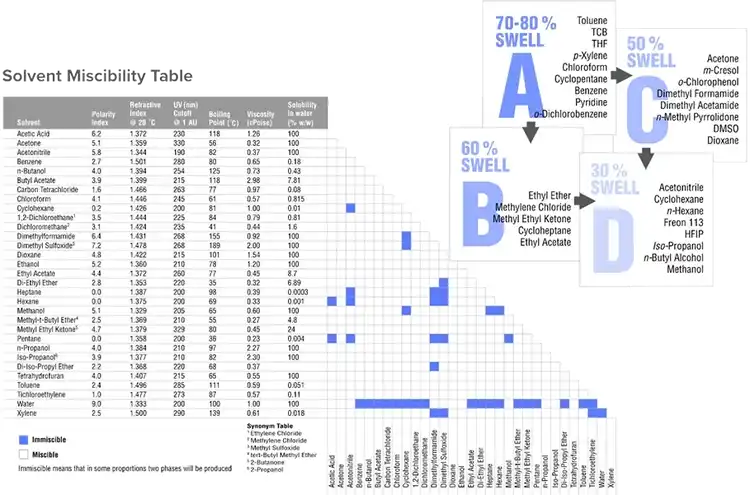
Although Phenogel GPC columns are rugged and can withstand strong solvent changes, care should be exercised when switching from high swell solvents (A) to low swell solvents (B, C, and D), see diagram below. Improper solvent switches can result in a void. Best results are attained when an intermediate swell solvent is used, and column lifetime is improved. Contact Phenomenex regarding solvents not listed below.
Column life can be maximized by dedicating certain columns to certain solvents. This will also minimize solvent switches. If care is not taken, a void may occur.
Introducing the GPC Solvent Savings Calculator