Method Development Strategies for Oligonucleotides
Level: Advanced
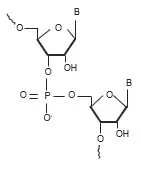
In this two-part series we will look at the challenges scientists face in the analysis of oligonucleotides and some of the method development levers they could pull when working on their analysis.
Traditional oligonucleotide methods employ the use of an ion-pair agent (typically an alkylamine such as triethylamine) to facilitate their retention on a C18 column. C18 phases are still preferred as they offer the highest level of efficiency when the goal is to resolve closely eluting impurities. In this first part, we will look at the effect of the mobile phase, specifically the alkylamine ion pair selected, on resolution and characterization.
In the literature TEA is often listed as a standard alkylamine to be used alongside hexafluoroisopropanol (HFIP) for the analysis of oligonucleotides. However, studies by the Bartlett laboratory would suggest that the different alkylamine types should be evaluated when developing a method for the analysis of oligonucleotides.1
Some general guidelines for selecting alkylamine and alkylamine concentration for use in your method are outlined below. Please be mindful these are guidelines to help method development and should form part of good experimental design.
Higher concentrations of alkylamine leads to increased retention time and higher ionization efficiency (Fig. 1).
Figure 1: Total Ion Chromatogram
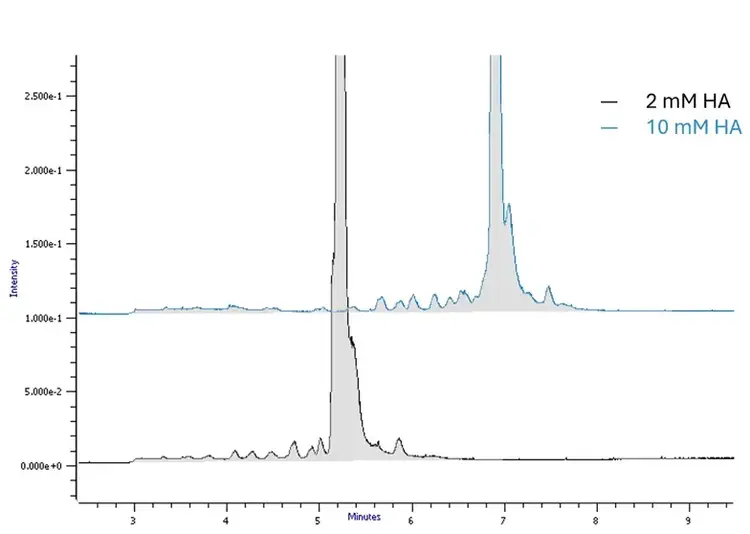
Deconvoluted Spectra
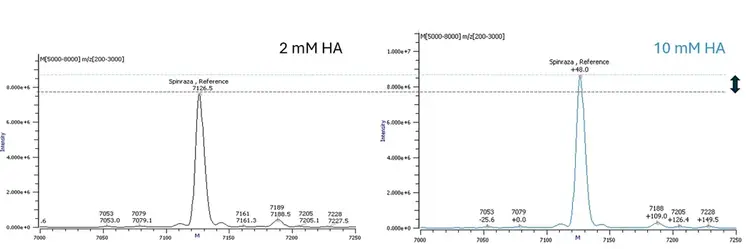
The concentration of alkylamine may be a concern, as ion-pair agents can linger around in your LC system and MS interface if you haven’t implemented a proper wash. In such cases, there are other strategies you can evaluate to reduce the amount of alkylamine in the first place. The use of a more hydrophobic alkylamine, such as hexylamine (HA), can allow you to reduce the concentration of ion-pairing agent and run a higher proportion of organic solvent in your gradient (Fig. 2) . Greater retention time, a higher proportion of organic solvent in your mobile phase, and lower concentration of ion-pairing agent will all help to facilitate higher ionization efficiency (Fig. 3).
Figure 2:
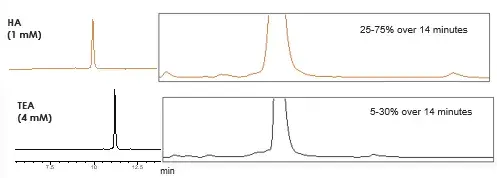
B: 12.5 mM HFIP, HA or TEA (as indicated) in methanol
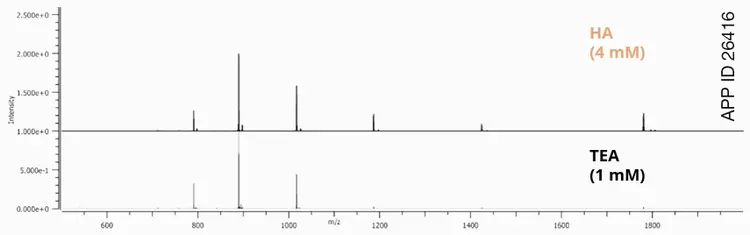
12.5 mM HFIP, 4 mM HA in Water
12.5 mM HFIP, 4 mM HA in Methanol
One final thing you should consider when choosing an ion-pairing agent is solubility. When there is lower solubility of the ion pair in the mobile phase, you can see some enhancement of ion pairing. However, if we take octylamine as a unique additional example, this additive is very much less soluble in highly aqueous mobile phases and requires more of an organic component. The high levels of organic which are required to solubilize this ion-pair agent make it less applicable in all situations, particularly when analyzing shorter oligonucleotides that are not well retained in highly organic mobile phases.
In summary, there is no magic bullet when it comes to selecting the best ion-pairing agent for the analysis of oligonucleotides, but following a few simple guidelines can significantly improve the characterization data you are able to obtain from your analysis.
1 Basiri, B.; Murph, M. M.; Bartlett, M. G. J Am Soc Mass Spectrom. 2017, 28(8), 1647–1656
Watch our free on-demand webinars
Oligonucleotide Analysis in Tissue Samples →
Advances in Oligonucleotide Sample Preparation and Analysis →