Oligonucleotide Analysis
Oligonucleotide analysis sits at the heart of nucleic acid research and the rapidly growing field of therapeutic development. As synthetic oligonucleotide candidates move from the bench to clinical pipelines, rigorous analytical testing at every stage of synthesis and purification becomes non-negotiable. The goal is always the same: confirm molecular identity, assess purity, and detect any impurities that could compromise safety or efficacy.
Whether you work with antisense oligonucleotides, small interfering RNA (siRNA), or other nucleic acid-based molecules, a well-designed oligonucleotide testing workflow gives you the confidence to move forward at every step.
Analytical Techniques Used in Oligonucleotide Analysis
electing the right analytical method depends on the molecule size, charge, chemical modification profile, and the type of information you need. Several orthogonal techniques are used across discovery, development, and quality control (QC) stages.
High/Ultra-High Performance Liquid Chromatography (HPLC/UHPLC)
Liquid chromatography remains the workhorse for oligonucleotide purity assessment and impurity profiling. HPLC and UHPLC platforms separate closely related sequences, failure sequences, and metabolites that differ by just one nucleotide, making them indispensable for synthetic oligonucleotide QC.
Ion-Pair Reversed-Phase HPLC (IP-RP HPLC)
IP-RP HPLC pairs an alkylamine mobile phase additive with a reversed-phase stationary phase to retain highly charged oligonucleotides. This mode resolves n-1 deletion sequences and other synthesis-related impurities with high selectivity, and analysts commonly use it for both DNA and RNA oligonucleotides.
Anion-Exchange (AEX) Chromatography
AEX chromatography separates oligonucleotides based on their anionic charge, which scales with chain length. AEX chromatography is particularly useful for the characterization of oligonucleotides carrying phosphorothioate backbones, a common chemical modification in therapeutic oligonucleotide drug candidates.
Hydrophilic Interaction Liquid Chromatography (HILIC)
HILIC separation works well for shorter synthetic oligonucleotides and modified nucleotides. The aqueous–organic mobile phase system provides an orthogonal selectivity to IP-RP, making HILIC a practical choice when you need a complementary analytical view of your sample.
Size-Exclusion Chromatography (SEC)
SEC separates oligonucleotides and their aggregates by molecular size. Analysts use SEC primarily to monitor higher-order structures, aggregate formation, and the overall molecular weight distribution of oligonucleotide therapeutics during formulation development.
Liquid Chromatography-Mass Spectrometry (LC-MS) for Oligonucleotide Characterization
Liquid chromatography coupled to mass spectrometry (LC-MS) delivers both chromatographic separation and direct molecular weight confirmation in a single run. Electrospray ionization (ESI) mass spectrometry generates multiply charged ions from intact oligonucleotides, enabling accurate molecular characterization without the need for separate experiments.
LC-MS also supports impurity identification, sequence confirmation, and the detection of chemical modifications across the full oligonucleotide drug development workflow. For oligonucleotide therapeutics such as siRNA and antisense oligonucleotides, LC-MS data support regulatory submissions and release testing.
Matrix-Assisted Laser Desorption/Ionization (MALDI)-Time of Flight (TOF) Mass Spectrometry
MALDI-TOF mass spectrometry provides rapid, high-throughput molecular weight determination for synthetic oligonucleotides after purification. The technique ionizes the intact molecule and records a single-charge mass spectrum, which simplifies data interpretation compared to ESI-MS.
Analysts often use MALDI-TOF for quick identity confirmation at the end of a synthesis campaign, while LC-MS handles more detailed structural characterization of oligonucleotide impurity profiles.
Challenges in Oligonucleotide Analysis
Oligonucleotide characterization is technically demanding for several interconnected reasons. Firstly, synthetic oligonucleotides are polydisperse mixtures. A standard solid-phase synthesis yields the full-length target sequence alongside a range of shorter deletion sequences, depurinated species, and other process-related impurities. Separating these species to achieve confident identification requires a stationary phase with tight batch-to-batch reproducibility and a mobile phase system tuned for selectivity.
Chemical modification adds another layer of complexity to oligonucleotide testing. Many therapeutic oligonucleotides carry phosphorothioate linkages, 2ʹ-O-methyl groups, and locked nucleic acid (LNA) modifications designed to improve metabolic stability. These modifications shift retention behavior and ionization efficiency, meaning that analytical methods validated for unmodified DNA and RNA do not transfer directly to modified oligonucleotide drug candidates.
Matrix effects present a real challenge for LC-MS detection in biological samples. Plasma proteins, lipids, and endogenous nucleic acids suppress ionization and interfere with accurate quantitation. Rigorous sample preparation is therefore an essential prerequisite for any downstream analytical or mass spectrometry work, not an optional step. The combination of demanding separation chemistry, complex matrices, and the need to detect low-abundance impurities makes oligonucleotide analysis one of the most technically challenging areas in biopharmaceutical testing.
Recommended Solutions for Oligonucleotide Analysis
Phenomenex designs products specifically for the analytical demands that oligonucleotide workflows place on separation science. The following solutions address purity assessment, structural characterization, and sample preparation across the full development cycle.
Biozen™ Oligo Columns
Biozen Oligo columns are purpose-built for the IP-RP HPLC and LC-MS analysis of oligonucleotide therapeutics. The unique hybrid particle and core-shell particle morphology delivers outstanding resolution of closely related sequences, including n-1 deletion sequences, that standard reversed-phase columns struggle to separate.
Biozen Oligo columns support the analysis of siRNA, antisense oligonucleotides, and other therapeutic nucleic acid molecules with high sensitivity and reproducible retention times across multiple injections. Their low-metal surface chemistry minimizes non-specific binding, which is critical for maintaining accurate purity assessments and reliable mass spectrometry detection of low-level impurities.
Clarity™ Oligo Columns
Clarity Oligo columns provide a complementary separation selectivity for oligonucleotide purity testing. The fully porous particle morphology delivers a high sample-loading capacity, making these columns well-suited for preparative purification work alongside routine analytical runs. Analysts use them as part of an orthogonal chromatography strategy to confirm purity results and detect impurities that a single analytical method might miss. The phase chemistry targets oligonucleotide-specific retention mechanisms, supporting consistent method development across a range of synthetic and therapeutic oligonucleotide types.
Clarity™ OTX Sample Preparation
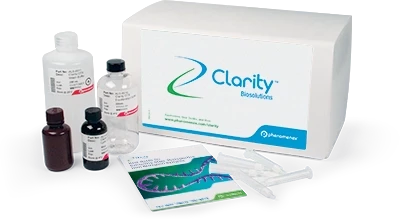
Clarity OTX is a mixed-mode solid-phase extraction (SPE) product designed specifically for oligonucleotide extraction from biological matrices. It removes the proteins, lipids, and phospholipids that cause ion suppression in LC-MS detection, delivering clean extracts with high oligonucleotide recovery from plasma and tissue samples. Clarity OTX makes it straightforward to build a reproducible, validated sample preparation workflow that protects sensitivity and supports accurate quantitation of oligonucleotide drug candidates in preclinical and clinical studies.
Ready to refine your oligonucleotide analysis workflow? Contact a Phenomenex specialist or request a free column trial to get started.