Zebron ZB-624 GC Columns

Robust Results for VOCs and Residual Solvents
- Widely used phase to separate volatile organic flavor and fragrance additives and residual solvents in industrial or pharmaceutical products (OVIs)
- Popular choice for residual solvent testing
- Excellent for US EPA Methods 501.3, 502.2, 503.1, 524.2, 601, 602, 624, 8010, 8015, 8020, 8021, 8240, 8260
- Specifically designed for the separation of volatile organic compounds (VOCs)
- Increased temperature limit speeds run times and re-equilibration
Need a G16 phase for residual solvents? See ZB-WAX
Recommended Use
EPA Methods (501.3, 502.2, 503.1, 524.2, 601, 602, 624, 8010, 8015, 8020, 8021, 8240, 8260), Pharmaceuticals, Residual Solvents, Volatile Organic Compounds (VOCs)

Order
Overview
Upgrade to Zebron from any 6 % cyanopropylphenyl / 94 % dimethylpolysiloxane phase:
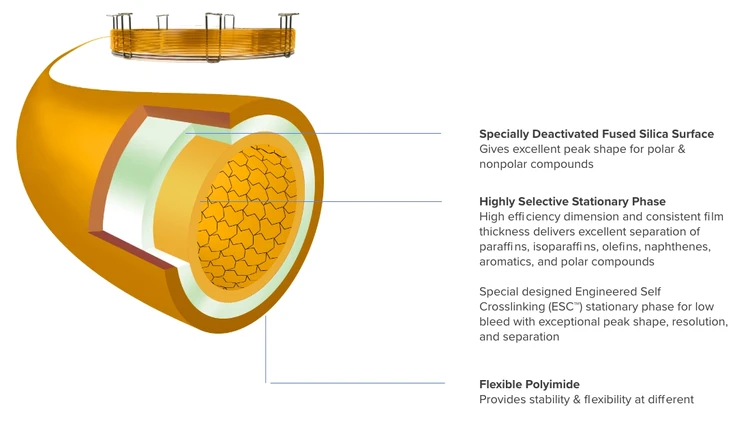
Zebron GC Column Benefits
Good Performance for Pharmaceuticals
USP <467> Residual Solvents Procedure A — Class 1
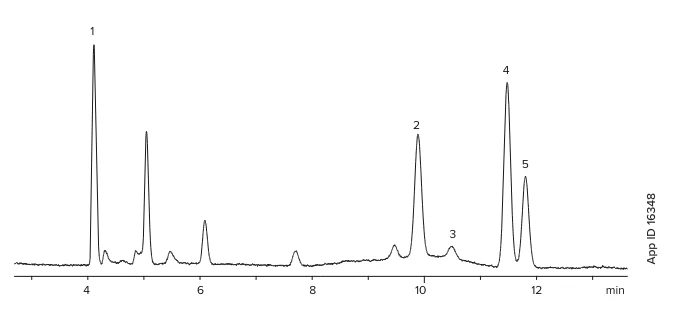
Sample:
1. 1,1-Dichloroethene
2. 1,1,1-Trichloroethane
3. Carbon tetrachloride
4. Benzene
5. 1,2-Dichloroethane
EPA Method 8260: Volatile Organic Analysis
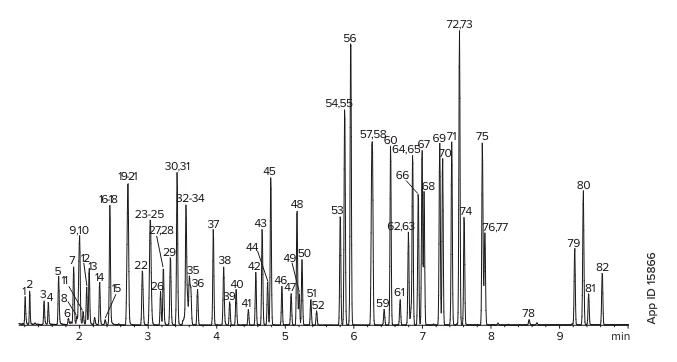
Sample:
1. Chloromethane
2. Vinyl chloride
3. Bromomethane
4. Chloroethane
5. Trichlorofluoromethane
6. Ethanol
7. Dichlorotrifluoroethane
8. Acrolein
9. Trichlorotrifluoroethane
10. 1, 1-Dichloroethene
11. Acetone
12. Methyl iodide
13. Carbon disulfide
14. Methylene chloride
15. t-Butanol
16. trans-1,2-Dichloroethane
17. Methyl-t-butyl ether
18. Acrylonitrile
19. 1, 1-Dichloroethane
20. Vinyl Acetate
21. Diisopropyl ether
22. Ethyl-t-butyl ether
23. 2, 2-Dichloropropane
24. cis-1, 2-Dichloroethene
25. 2-Butanone
26. Bromochloromethane
27. Chloroform
28. Tetrahydrofuran
29. 1, 1, 1-Trichloroethane
30. 1, 1-Dichloropropene
31. Carbon tetrachloride
32. 1, 2-Dichloroethane-d4
33. Benzene
34. 1, 2-Dichloroethane
35. t-Amyl methyl ether
36. Fluorobenzene
37. Trichloroethene
38. 1, 2-Dichloropropane
39. Dibromomethane
40. Bromodichloromethane
41. 2-Chloroethylvinyl ether
42. cis-1, 3-Dichloropropene
43. Methyl isobutyl ketone
44. Toluene-d8
45. Toluene
46. trans-1, 3-Dichloropropene
47. 1, 1, 2-Trichloroethane
48. Tetrachloroethene
49. 1, 3-Dichloropropane
50. 2-Hexanone
51. Dibromochloromethane
52. Ethylene dibromide
53. Chlorobenzene
54. 1, 1, 1, 2-Tetrachloroethane
55. Ethylbenzene
56. m,p-Xylene
57. o-Xylene
58. Styrene
59. Bromoform
60. Isopropylbenzene
61. 4-Bromofluorobenzene
62. 1, 1, 2, 2-Tetrachloroethane
63. Bromobenzene
64. 1, 2, 3-Trichloropropane
65. n-Propylbenzene
66. 2-Chlorotoluene
67. 1, 3, 5-Trimethylbenzene
68. 4-Chlorotoluene
69. tert-Butylbenzene
70. 1, 2, 4-Trimethylbenzene
71. sec-Butylbenzene
72. 1, 3-Dichlorobenzene
73. 4-Isopropyltoluene
74. 1, 4-Dichlorobenzene
75. n-Butylbenzene
76. 1, 2-Dichlorobenzene-d4
77. 1, 2-Dichlorobenzene
78. 1, 2-Dibromo-3-chloropropane
79. 1, 2, 4-Trichlorobenzene
80. Hexachlorobutadiene
81. Naphthalene
82. 1, 2, 3-Trichlorobenzene
Meet Zebron ZB-624PLUS!
- Enhanced Peak Shape with Superior Deactivation
- Increased Sensitivity for High Boiling Solvents
- Extremely Low Bleed for GC-MS
- High Temperature Stability (300/320 ˚C)