Lifestyle Peptide Demand is Outpacing Safety Oversight

Peptides Are Everywhere. Safety Isn't.
Between Instagram Reels, TikTok influencers, and the recent FDA advisory panel discussions, peptides have gone beyond trending. They're viral. As a result, my phone has been ringing off the hook. Everyone from CROs to my personal trainer cousin wants to talk about peptide testing.
I tell them all the same thing: safety is paramount, and we're not there...yet.
Before diving deeper, it's important to distinguish between the two categories of peptides that most often enter these conversations:
What Are Therapeutic Peptides?
Therapeutic peptides are FDA-approved prescription medications used to treat specific diseases. They undergo extensive clinical evaluation and regulatory review before receiving approval for a defined medical indication. Once approved, the final drug product is subjected to rigorous quality control testing and manufactured under strict regulatory requirements designed to ensure patient safety.
What Are Lifestyle (Wellness) Peptides?
Lifestyle peptides are not FDA-approved for safety or efficacy. They are frequently marketed through compounding pharmacies or online vendors and are often used based on self-direction for benefits such as vitality, recovery, weight management, or sleep improvement. Unlike therapeutic peptides, these products typically lack the extensive clinical and regulatory oversight associated with approved pharmaceuticals.
In the world of analytical testing, therapeutic peptides have dominated the conversation for years. Their amino acid sequences create unique analytical challenges, particularly when it comes to identifying process impurities, degradation products, and structurally similar variants. Yet despite this complexity, I've always taken comfort in the regulatory framework surrounding these products. Manufacturers are required to demonstrate quality, consistency, and safety before these drugs ever reach patients.
The same cannot be said for many lifestyle peptides.
Today, countless consumers purchase peptides from online vendors that market their products as "Research Use Only." In these cases, manufacturers often assume little responsibility for how their products are ultimately used, leaving consumers with few assurances regarding quality, purity, identity, or safety.
The FDA Compounding Recommendation and What It Means
A more promising path may emerge through regulated compounding pharmacies. Recently, the FDA's Pharmacy Compounding Advisory Committee voted to recommend six wellness peptides for consideration in pharmacy compounding: BPC-157, KPV, TB-500, MOTS-c, Epitalon, and Semax.
To be clear, this recommendation does not establish that these peptides are safe or effective, nor would compounded versions become FDA-approved products. However, it does represent a meaningful step forward. Compounding pharmacies operate within a healthcare framework and have a professional obligation to provide safe patient care, bringing a level of oversight that is largely absent from the online marketplace.
Why Analytical Testing of Lifestyle Peptides Matters
If these peptides become more widely available through compounding pharmacies, expectations for analytical testing will rise dramatically. Product manufacturers, compounding pharmacies, and both internal and third-party testing laboratories will face increasing demands for robust methods capable of confirming identity, quantifying purity, characterizing impurities, and demonstrating product consistency and stability. Many laboratories may need additional accreditations, enhanced quality systems, and the capability to withstand FDA-level scrutiny.
That's a significant challenge for the analytical community. But if the result is greater confidence in peptide quality and improved patient safety, it's work worth doing.
Because at the end of the day, the message hasn't changed:
Safety is paramount.
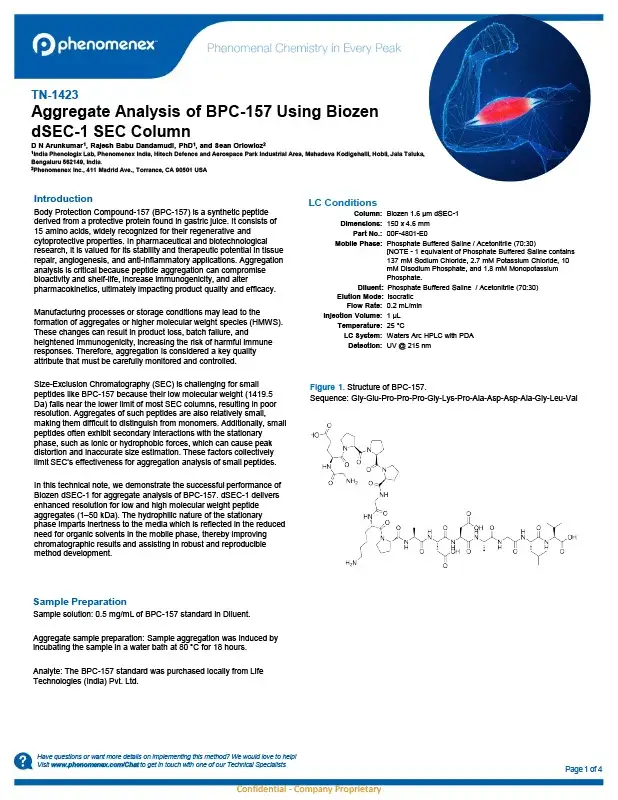
Aggregate Analysis of BPC-157 Using Biozen dSEC-1 SEC Column