How to Reduce Peak Tailing in HPLC?
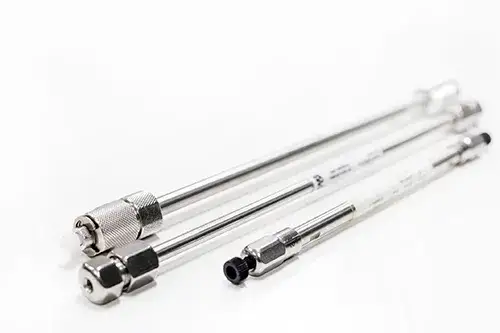
Peak tailing is a common challenge in high-performance liquid chromatography (HPLC) that can compromise resolution, quantification accuracy, and overall method reliability.
An ideal peak is characterized by a sharp, symmetrical Gaussian shape resting on a flat baseline. However, peaks often deviate from this ideal in various ways, such as becoming asymmetrical, flattening and broadening, or exhibiting an elevated baseline.
A common deviation from the Gaussian shape occurs when the trailing side of the peak diminishes less rapidly. If the peak were divided vertically into two halves, the latter half would appear broader than the initial half. This phenomenon, most noticeable near the baseline, is referred to as peak tailing.
What Causes Peak Tailing in HPLC?
- Multiple Retention Mechanisms Peak tailing occurs when more than one retention mechanism is present during separation, and one of these mechanisms becomes overloaded, disrupting the ideal symmetrical peak shape.
- Exposed Silanol (Si–OH) Groups In traditional C18 columns, a portion of the silica surface remains unbonded, leaving exposed silanol groups that can interact with basic solutes, potentially leading to asymmetrical peak shapes. While modern column chemistries have significantly reduced this issue through higher bonding densities and end-capping, residual silanol activity may still be observed, especially under certain conditions. These silanol groups can interact with the sample, particularly with basic solutes, leading to asymmetrical peak shapes.
- Silanol Group Configurations Silanol groups on the silica surface can exist in different configurations. Free silanols are more acidic compared to geminal or associated silanols. The increased acidity of free silanols leads to stronger interactions with analytes, particularly basic compounds, which contributes to peak tailing.
- Trace Metal Contamination Trace metals such as iron and aluminum present in the silica matrix can act as ion-exchange sites or withdraw electrons from silanol groups. This increases the acidity of the silanols, enhancing their ability to interact with analytes and exacerbating peak tailing.
- Type A Silica Columns Older column packings, known as Type A silica, contain all forms of silanols, including free, geminal, and associated silanols. These columns typically exhibit significant peak tailing for basic compounds due to the high content of free silanols and the presence of trace metals.
Why is Peak Tailing a Problem?
- Tailing peaks exhibit significantly lower heights compared to symmetrical peaks with the same area. This reduction in peak height compromises the lower limit of quantification, making it challenging to detect trace levels of analytes accurately.
- Peak-detection algorithms rely on changes in the baseline slope to determine peak boundaries. Severe tailing results in a more gradual return to the baseline, making it difficult for the system to accurately identify the peak's end. This can lead to inconsistent area measurements across multiple injections, introducing errors in quantification.
- In assays where minor peaks (e.g., metabolites or impurities) are present alongside major peaks, tailing can cause minor peaks to merge with or hide beneath the tail of major peaks. This obscuration can prevent the detection and accurate reporting of minor components, potentially failing to meet regulatory guidelines such as those set by the International Committee on Harmonization (ICH).
- Achieving baseline resolution for tailing peaks requires longer chromatographic run times compared to peaks with minimal or no tailing. Extended run times reduce the efficiency of routine analyses and increase operational costs.
- Tailing peaks degrade the overall quality of the chromatogram by introducing asymmetry and baseline disturbances. This degradation makes it harder to interpret the chromatographic data and can obscure the separation of closely eluting compounds.
- Tailing peaks raise concerns about peak purity and the accuracy of quantification. Inconsistent peak shapes can lead to variability in measured areas, reducing the reliability and reproducibility of their results.
- Regulatory guidelines often require clear separation and accurate quantification of all components in a sample. Severe peak tailing can impede compliance by making it difficult to detect and quantify minor impurities or degradation products as required.
How to Reduce Peak Tailing in HPLC
Peak tailing in HPLC is a common issue caused by various factors, primarily involving secondary interactions between analytes and the stationary column phase. Addressing it requires a combination of column selection, mobile phase optimization, and instrumental adjustments. Here's a structured approach to minimize peak tailing:
To minimize peak tailing in chromatography, several effective strategies can be employed.
- Modify the mobile phase – Historically, Type A silica columns required tail-suppressing compounds like triethylamine (≥20 mM) to neutralize free silanol groups and reduce peak tailing.
- Utilize Type B silica columns – Modern Type B silica columns, with reduced free silanol content and metal-free manufacturing, significantly minimize peak tailing for basic compounds, reducing the need for additives.
- Adjust mobile phase pH – Using a low-pH mobile phase (pH ≤ 3) suppresses silanol ionization, decreasing interactions that cause peak tailing.
- Explore alternative stationary phases – Non-silica supports like organic polymers and zirconia eliminate peak tailing while providing sharper, more symmetrical peaks for enhanced LC method reliability. Hybrid stationary phases, which combine silica and organosiloxane materials, offer improved pH stability and reduced silanol activity, making them a versatile choice for challenging separations. Additionally, stationary phases with a positive surface charge can help suppress interactions with basic analytes, further minimizing peak tailing and improving peak symmetry, particularly in the separation of ionizable compounds.
Troubleshooting unwanted peaks in HPLC requires a strategic approach, including optimizing column selection, adjusting mobile phase conditions, and exploring alternative stationary phases to achieve sharper, more reliable separations.