HPLC Autosampler: What It Is, How It Works, Types, and Benefits in Chromatography
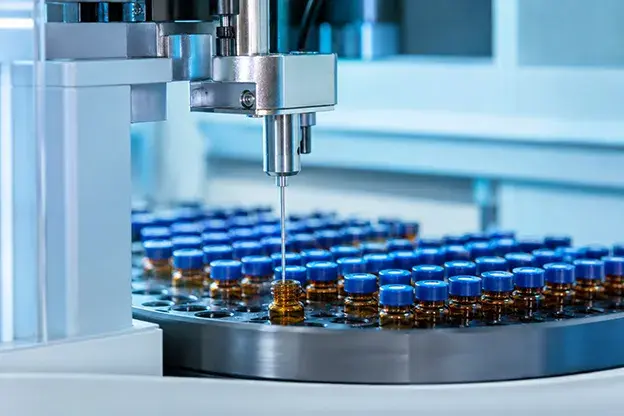
An autosampler in HPLC is an automated version for when the user has many samples to analyze or when manual injection is not practical (1). Labs that run dozens or hundreds of samples a day depend on it for consistent, unattended operation. Manual injection simply cannot match the speed, precision, or throughput that modern analytical workflows demand, and that gap is exactly where autosamplers prove their value.
What Is an Autosampler in HPLC?
If you are asking what is an autosampler, the short answer is that it is the automated gatekeeper between your sample and your HPLC column. Injectors serve to introduce the required sample volume accurately into the HPLC system, and precise injection is required against high back pressure (1). An autosampler in HPLC replaces manual syringe injection by mechanically aspirating a defined sample volume and delivering it into the HPLC system with minimal variation between injections (2).
The core job of an autosampler HPLC unit is to pick up a sample from a vial or well plate, transfer a precise aliquot into the injection valve, and release it into the mobile phase stream at exactly the right moment. Compared with manual injection, where small differences in technique introduce variability, an autosampler delivers repeatable injection volumes every time, making it a cornerstone of modern quantitative analysis.
Why Is an Autosampler Important in HPLC?
The value of an autosampler in HPLC goes well beyond simple convenience. Human error during manual injection is one of the most common sources of analytical variability, and autosamplers nearly eliminate that problem by applying the same mechanical sequence to every sample (1). Automated injection boosts lab efficiency while removing human error (1). They allow labs to run overnight sequences without operator presence, which directly increases throughput and reduces cost per sample.
Today’s HPLC setups routinely combine an autosampler with an automated injector as standard equipment (1). Regulatory environments in pharmaceutical and clinical testing require strict documentation of injection precision, and autosamplers generate that data automatically through integrated software logs.
Consistent injection volume is an absolute priority for quantitative HPLC analysis, so any reduction in volume variability translates directly into tighter calibration curves, more reliable peak area ratios, and better method reproducibility across days, operators, and instruments. Injectors serve to introduce the required sample volume accurately into the HPLC system. Delivering a sample into a pressurized liquid mobile phase presents a fundamentally different challenge than introducing a sample into a gas stream, as the HPLC system must accept each injection accurately while operating under elevated back pressure (1). For labs handling large sample batches, autosamplers are not optional equipment; they are essential infrastructure.
How Does an HPLC Autosampler Work?
Understanding the working of an HPLC autosampler means following the sample from its vial all the way into the column. The process is mechanical, repeatable, and software-controlled. A typical injection sequence includes: the needle moves to the sample vial, the needle pierces the septum, the sample is aspirated, the sample loop is filled, and the injection valve introduces the sample into the mobile phase (2).
Here are the steps encompassing the working of an autosampler in HPLC:
Sample Loading and Tray Positioning
The autosampler tray, which holds sample vials or microplates in numbered positions, moves under software control to bring the target vial directly beneath the injection needle (2). The control system reads the sequence table and positions the correct vial without any operator input.
Needle Aspiration and Sample Uptake
Once the vial is in position, the needle descends and pierces the septum. A syringe or metering pump then draws a defined volume of sample upward into the needle and transfer line (2). This aspiration step determines how much sample enters the system, so the pump’s accuracy is critical.
Injection Loop Filling
The aspirated sample fills the injection loop, which is a small, calibrated segment of tubing that holds the exact injection volume. Loop-based systems guarantee that the volume entering the column is set by the physical dimensions of the loop, not by timing alone (1).
Sample Injection into the Mobile Phase
The injection valve switches position, and the mobile phase now flows through the loop, sweeping the sample plug onto the column. This switch must happen cleanly to avoid band broadening at the very start of the separation. A sharp, well-defined sample plug entering the column produces sharper peaks and better resolution.
Needle Wash and Cycle Repeat
After injection, the needle retracts and moves to a wash station, where it flushes with an appropriate solvent to remove any residual sample. This wash step is the primary defense against carryover between samples (2). The system then advances to the next vial and repeats the entire cycle.
Key Components of an HPLC Autosampler
Every autosampler injection system shares a set of core components that work together to deliver consistent performance.
Sample Tray (Vials or Microplates)
The tray holds sample containers in fixed positions and moves mechanically to align each vial with the needle path (2).
Injection Needle
A stainless steel or PEEK needle pierces the vial septum, aspirates the sample, and delivers it to the valve. Needle geometry affects both carryover and sample loss.
Syringe or Metering Pump
This component controls aspiration volume with high precision. Syringe-based systems are common in low-volume applications where sub-microliter accuracy matters.
Injection Valve
A rotary six-port valve switches between load and inject positions, directing the sample into the flow path at the correct moment (1).
Control System and Software
The software schedules injection sequences, logs timestamps, tracks injection volumes, and integrates with the detector data system to link each chromatogram to its sample ID.
Types of Autosamplers in HPLC
Understanding the types of autosamplers in HPLC helps you match the right technology to your application.
Loop Injection Autosampler
This is the most widely used design. The sample fills a fixed-volume loop, and the mobile phase sweeps it onto the column. Loop autosamplers offer excellent volume reproducibility and suit high-throughput routine analysis (1).
Flow-Through Needle Autosampler
Here, the needle itself acts as the injection vessel. Sample travels directly from the needle into the valve without a separate loop, which reduces dead volume and carryover. This design is popular for low-volume or high-sensitivity applications where every microliter counts.
Programmable Autosampler
Programmable systems allow variable injection volumes, custom wash protocols, and complex sample preparation sequences such as dilution or mixing inside the autosampler. They suit method development environments where parameters change frequently.
Advantages of Using an Autosampler in HPLC
The advantages of an autosampler in HPLC span precision, efficiency, and data integrity. Key benefits include:
- Injection Reproducibility: Mechanical injection eliminates the hand-to-hand variability that comes with manual syringes, giving tighter %RSD values across replicate injections.
- Unattended Operation: Labs can run full sample sequences overnight or over weekends without an operator present.
- Higher Throughput: Sample cycle times are shorter and more consistent than manual workflows.
- Reduced Sample Handling Errors: Automated vial tracking and sequence logging cut transcription mistakes and mislabeled injections.
- Regulatory Compliance Support: Electronic run logs and injection records satisfy audit trail requirements in regulated environments.
Applications of Autosamplers in HPLC
The autosampler in HPLC supports analytical work across a wide range of industries.
Pharmaceutical Analysis
Drug manufacturers use autosamplers to run potency assays, impurity profiling, and dissolution testing on batches of tablets, capsules, and injectables. Regulatory guidelines demand tight injection precision, and autosamplers deliver the %RSD values that compliance teams require.
Food and Beverage Testing
Food safety labs analyze pesticide residues, mycotoxins, preservatives, and nutritional markers in complex food matrices. Autosamplers handle large batches of extracts overnight, so analysts receive results by morning rather than spending their day at the instrument.
Environmental Monitoring
Water, soil, and air quality labs routinely screen hundreds of samples for trace contaminants such as polycyclic aromatic hydrocarbons, heavy metal chelates, and disinfection byproducts. Autosamplers make that scale of testing practical without proportionally scaling the workforce (2).
Clinical and Bioanalytical Research
Pharmacokinetic studies generate plasma and urine samples at multiple time points per subject. Autosamplers process these time-sensitive biological matrices with the consistency that concentration-time curve calculations require, supporting drug development decisions based on reliable bioanalytical data.
Autosampler vs. Manual Injection in HPLC
The comparison between an autosampler in HPLC and manual injection comes down to control, consistency, and scale.
Manual injection still has a place during early method scouting when a scientist needs to quickly test a single sample or troubleshoot a problem on the bench. For any application that requires validated, reproducible results across many samples, however, an autosampler is the clear practical choice.
Common Problems in HPLC Autosamplers and Troubleshooting
Even well-maintained instruments encounter issues. Knowing the root cause of each problem speeds up the fix.
Carryover Issues
Carryover happens when residual sample from a previous injection contaminates the next one (2). The most common causes are an insufficient needle wash volume, a wash solvent that is too weak for the analyte, or worn needle seals that trap the sample in crevices (2). Handle carryover by extending autosampler wash options to reduce it, and clean the needle, needle seat, and rotor seal (3). Increase wash solvent volume, switch to a stronger wash solvent compatible with your analytes, and inspect seals regularly.
Sample Contamination
Cross-contamination can come from a dirty needle, a contaminated wash reservoir, or vials placed in the wrong tray positions. Verify wash solvent freshness, inspect needle surfaces for deposits, and double-check your sequence table against the physical tray layout. Ghost peaks indicate contamination typically from the injector or column, so flush the sampler and replace parts prone to contamination (3).
Injection Volume Inconsistency
Variable peak areas across replicate injections usually point to air bubbles in the syringe, a worn syringe plunger, or a leaking injection valve rotor seal (3). The autosampler may draw air from the vial, so check the sample filling height and the sampling height of the injector needle (3). Prime the syringe line to expel air, replace the plunger if it shows wear, and pressure-test the valve for leaks.
Needle Blockage or Clogging
Particulate matter in samples is the most frequent cause of needle clogs (2). One of the most common autosampler problems is needle clogging, caused when particles enter the injection system and block the needle or sample loop (2). Symptoms include increased system pressure after injection, missing peaks in chromatograms, and partial or inconsistent injections (2).
Always filter or centrifuge samples before loading them into vials, and keep a spare needle on hand. If a blockage occurs, the injector needle may be clogged or the needle tip deformed, and the solution is to replace the needle and remove air from the autosampler fluidics (3). Back-flush the needle carefully with an appropriate solvent and inspect the tip under magnification. Good HPLC column care practices also reduce the risk that column debris migrates backward into the autosampler during system maintenance.
How to Choose the Right HPLC Autosampler
Selecting the right autosampler HPLC configuration starts with four questions: How many samples do you run per day? What injection volume range does your method require? What sample types and matrices are you working with? Does your method need variable volume, dilution, or mixing before injection? Labs running high-volume routine work benefit from large-capacity trays and fast cycle times.
Bioanalytical labs working with plasma or urine may need flow-through needle designs to cut carryover. Method development labs value programmable systems with flexible wash protocols. A well-chosen autosampler works best as part of a complete, well-configured HPLC system, which includes choosing the right HPLC column for the specific application alongside the right injection hardware.
Match the autosampler’s temperature control capability to your sample stability requirements, and verify that the system’s software communicates with your data system before purchase. Present-day advanced HPLC systems are equipped with an auto-injector along with an auto-sampler for optimal performance (1).
FAQs on HPLC Autosampler
What is the difference between an autosampler and an injector?
A manual injector is a hand-operated valve where the analyst physically loads a sample with a syringe and turns the valve. What is an autosampler? It is a fully automated device that performs the same loading and injection sequence mechanically, without operator input, across an entire batch of samples. An autosampler serves as the automated alternative when labs need to process large sample batches or manual injection becomes impractical. The autosampler replaces the human hand with a programmed robotic mechanism.
Why is an autosampler used in chromatography?
An autosampler in chromatography is used to achieve high injection reproducibility, remove operator-to-operator variability, increase sample throughput, and support unattended overnight runs. It is especially important in regulated labs where every injection must be documented, traceable, and performed within validated precision limits. Switching to automated injection cuts down on human error and makes labs more productive.
References
- Ali AH. (2022). High-Performance Liquid Chromatography (HPLC): A review. Annals of Advanced Chemistry, 6, 010–020. https://www.advancechemjournal.com/journals/aac/aac-aid1026.php
- Maxi Scientific. (2026, April 2). Autosampler troubleshooting guide: Fixing clogs, carryover, and injection problems in HPLC and LC-MS systems. Maxi Scientific Blog. https://maxisci.com/blog/autosampler-troubleshooting-guide-fixing-clogs-carryover-and-injection-problems-in-hplc-and-lcms-systems/
- Burghate, A. V., Sisodia, J. S., Patil, H. B., & Misar, S. N. (2014). A review on HPLC-trouble shooting guide. International Journal of Pharmaceutical Sciences Review and Research, 27(2), 200–209. https://globalresearchonline.net/journalcontents/v27-2/32.pdf