LC Particle Type

Core-Shell
Designed with a solid core surrounded by a porous shell, providing high efficiency and resolution by reducing band broadening.
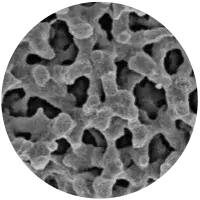
Monolith
Comprising a continuous porous network, monoliths enable fast flow rates and high throughput, making them suitable for rapid analyses.
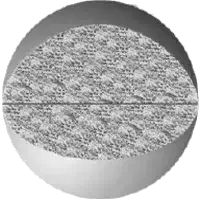
Fully Porous
With a uniform porous structure, these particles offer a high surface area, enhancing analyte interaction and separation capacity.

Polymer
Constructed from chemically stable polymers, these particles are versatile and suitable for a wide range of applications, including those requiring specific chemical compatibilities.
Chromatography is a versatile analytical technique used to separate, identify, and quantify components in a mixture. Within liquid chromatography (LC), the performance of an LC column depends on several design factors—among them, particle type stands out as one of the most critical. As the foundation of column design, the choice of particle type directly influences separation efficiency, resolution, and overall method performance.
-
Particle technology drives results: Influencing method runtime (speed), resolution, and robustness.
-
Evolution of particle structure: Moving from traditional, fully porous particles to advanced innovations such as:
- Core-shell
- Polymer
- Monolith
- Non-porous
-
Application-driven design: Each particle type is tailored to specific sample types and analytical goals, helping scientists choose the most effective method for their needs.
At Phenomenex, we offer a diverse range of chromatography particle types designed to enhance performance and efficiency. Whether your goal is high-throughput screening, separating challenging mixtures, or analyzing large biomolecules, we provide solutions to optimize your workflow and achieve reproducible, high-quality results.
Types of LC Particles Explained
The table below highlights the five primary LC particle technologies, their structures, and best-fit applications:
Phenomenex Particle Technology Portfolio
Phenomenex provides one of the broadest selections of LC particle technologies. Our Kinetex Core-Shell particles deliver UHPLC-like performance even on standard HPLC systems, while our Luna Fully Porous particles remain a trusted solution for method development and QC workflows. We also offer advanced polymeric, monolithic, and non-porous formats, ensuring solutions for applications ranging from small molecules to complex biologics.
Explore the full Liquid Chromatography portfolio to review the range of particle technologies and determine which best fits your application needs. Additional resources, including guidance on how to choose the right HPLC column, are available to support informed column selection and method development.
FAQs
Which particle type is best for high throughput?
For high-throughput analysis, core-shell particles are a top choice. Their solid core and porous shell enable faster mass transfer of analytes, delivering rapid separations with lower backpressure. Monolithic columns are great for simple mixtures, as their continuous porous structure supports very high flow rates without compromising efficiency.
How should I maintain columns with different particle types?
Analytes were extracted from seawater (1 mL load @ 5 ppm) Always operate within the recommended pH and temperature ranges of the column. Use a guard column to protect against contaminants and store columns in an appropriate solvent (commonly methanol or acetonitrile) when not in use. Avoid sudden pressure changes—ramp up flow rate gradually to extend column life.
What is the difference between core-shell and fully porous particles?
The difference lies in structure and analyte interaction. Fully porous particles provide high loading capacity with pores throughout the particle. Core-shell particles have a solid core and thin, porous shell, creating a shorter diffusion path that improves efficiency, reduces band broadening, and produces sharper peaks, particularly at higher flow rates.