Core-Shell Technology
Core-shell technology has revolutionized how scientists achieve high-efficiency, high-resolution chromatographic separations without overhauling their existing HPLC systems. Core-shell particles minimize band broadening and deliver significant improvements in speed, sensitivity, and resolution, making them a powerful asset for modern analytical workflows.
Phenomenex Core-Shell Column Portfolio
Phenomenex proudly offers a wide range of cutting-edge core-shell products that have revolutionized chromatography. Our core-shell columns deliver unmatched performance and efficiency, aiding scientists and researchers in achieving superior analytical results. These columns are compatible with various sample matrices and mobile phases, making them versatile for different analytical methods.

Unlock new possibilities with our advanced core-shell technology
Kinetex Columns
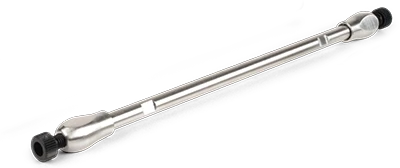
Kinetex core-shell columns provide industry-leading efficiency for small-molecule separations, offering diverse phase chemistries and multiple particle sizes to support both HPLC (Kinetex HPLC Column) and UHPLC platforms. Their optimized architecture reduces band broadening, enabling faster run times, tighter peaks, and improved resolution, ideal for pharmaceutical, environmental, food safety, and clinical testing labs striving for high throughput and reproducible quantitation.
Aeris Columns
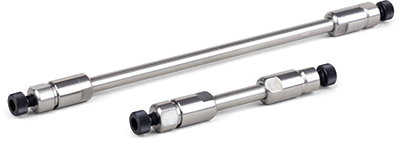
Aeris columns are specifically engineered to improve the separation of proteins and peptides. With pore structures tailored for larger biomolecules, Aeris enhances mass transfer, peak shape, and recovery, making it a strong choice for peptide mapping, intact protein analysis, and biopharmaceutical characterization. Users gain sharper, more reliable separations without sacrificing robustness or method consistency.
Biozen Biologics Columns
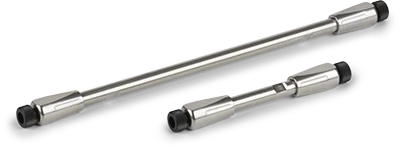
Biozen columns combine core-shell particle innovation with bioinert hardware to support the sensitive analysis required for modern biologics. Designed for mAbs, ADCs, oligos, and other large biomolecules, Biozen delivers exceptional performance for critical quality attributes, structural confirmation, and impurity profiling. The result is improved sensitivity, reduced adsorption, and greater confidence in biologics data.
What Is Core-Shell Technology?
Core-shell represents a groundbreaking technique that has transformed chromatography. This advanced technology employs particles with a solid core enveloped by a porous shell, resulting in enhanced separation efficiency, allowing for increased sample throughput or higher resolution separation of complex mixtures.
Core-shell technology is a state-of-the-art approach to producing high-performance stationary phases for U/HPLC. It involves creating structures where a solid silica core is encased by a thin porous shell layer. This innovative design presents numerous advantages over traditional particle structures, making it highly valuable in many applications.
The formation of core-shell structures occurs through a process known as shell deposition. In this process, a precursor material is meticulously coated onto the solid core particles' surface. The precursor material then transforms, forming a thin, uniform shell layer around the core. The shell layer's thickness can be precisely controlled, allowing for customization based on specific needs.
Applications of Core-Shell Technology
Core-shell technology represents a significant advancement in analytical chemistry, and due to these advantages, it has found applications across multiple industries. By minimizing analyte diffusion and maximizing efficiency, core-shell columns support critical decisions in:
- Pharmaceutical and biopharmaceutical development:Faster method development, cleaner separations, and improved quantitation for APIs, impurities, degradants, and biomolecules.
- Food and environmental testing: Enhanced sensitivity for pesticides, contaminants, environmental pollutants, and trace-level analytes.
- Clinical and forensic testing: Reliable, high-throughput separations for complex biological matrices.
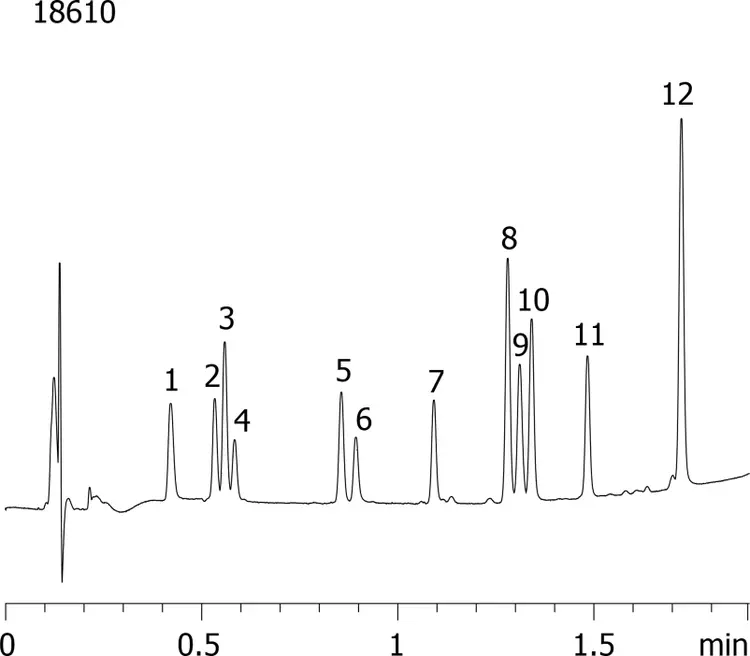
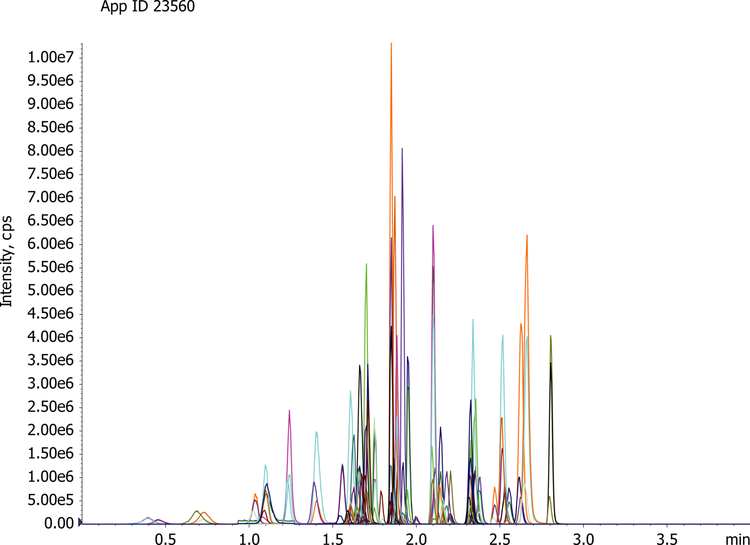
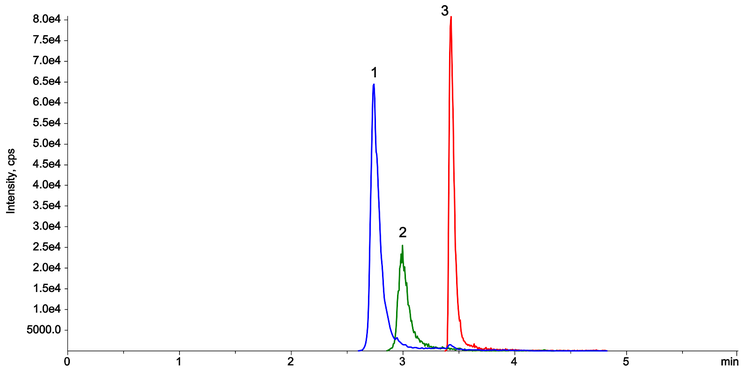
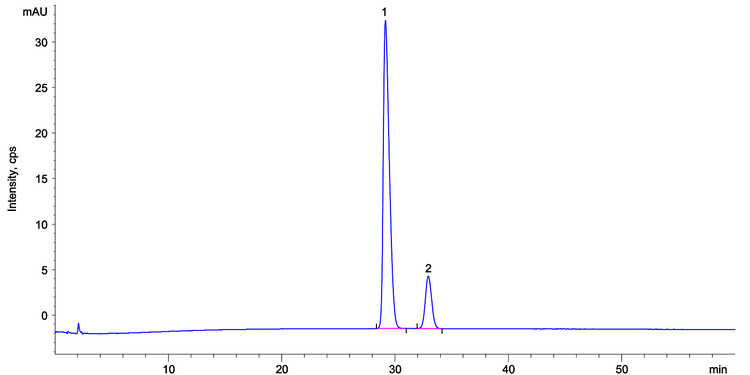
Explore Some of Our Popular Core-Shell Applications
Advantages of Core-Shell Technology
Core-shell HPLC columns deliver a powerful combination of performance and practical benefits designed for modern analytical labs:
- Enhanced Efficiency: The unique structure of core-shell particles allows for superior separation and improved analytical performance. The shell layer's controlled porosity provides faster analysis times and better resolution.
- Improved Sensitivity: The shell layer minimizes diffusion of the analyte bands, making the peaks narrower and therefore taller. This leads to more accurate and reliable analytical results.
- Faster Run Times: High efficiency and short diffusion paths accelerate analyses without sacrificing quality.
- Lower Backpressure: Achieve UHPLC-like performance on conventional HPLC systems.
- Versatility: Core-shell particles are compatible with various sample matrices and mobile phases, making them suitable for different analytical methods.
- Unmatched Consistency: Highly reproducible performance from column to column and batch to batch.
- Customization: The shell layer's thickness can be precisely controlled, allowing for tailored properties based on specific needs.
Why Choose Phenomenex Core-Shell Technology?
Phenomenex leads in core-shell technology, offering a range of innovative products tailored to meet the diverse needs of scientists and researchers. Our core-shell particles deliver outstanding performance, providing increased efficiency and sensitivity for various applications.
Choosing our core-shell columns can greatly enhance your analytical performance, saving time and resources while achieving superior separation and detection. Whether you're analyzing small molecules, peptides, proteins, or complex mixtures, our products deliver reliable and reproducible results. We design, manufacture, and sell our own silica and organo-silica core-shell particles, ensuring the highest quality and performance for your chromatographic needs.
Contact our experts for personalized column recommendations.
FAQs on Core-Shell Technology
How do core-shell particles improve chromatographic efficiency?
The solid core reduces diffusion paths and minimizes band broadening, leading to sharper peaks and higher resolution than fully porous particles.
Are core-shell columns suitable for protein or peptide separations?
Yes. Many core-shell phases including Phenomenex Kinetex C18, XB-C18, and EVO C18, excel at peptide mapping, intact proteins, and biomolecule separations.
Can core-shell columns be used for both reversed-phase and normal-phase chromatography?
Core-shell particles support reversed-phase, HILIC, and normal-phase modes depending on the bonded phase selected.
Can core-shell columns be used on standard HPLC systems?
Yes. One of the biggest advantages of core-shell technology is achieving UHPLC-like performance without requiring UHPLC pressures.
What types of samples are suitable for core-shell technology columns?
A wide range from pharmaceuticals and metabolites to environmental contaminants, food residues, and clinical biomolecules.