Fully Porous Particles in HPLC and UHPLC
Our Fully Porous Products
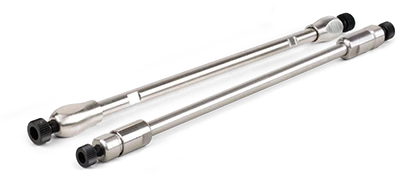
Fully porous particles are renowned in HPLC and UHPLC for their excellent separation efficiency and high loading capacity. These particles feature a uniform pore size distribution, optimizing analyte retention and separation. Phenomenex offers a wide range of HPLC Columns designed for consistent performance across analytical applications. Explore our range of fully porous HPLC and UHPLC columns, engineered for superior efficiency and sample loading capacity. Featured below are four of our leading fully porous products.




What Are Fully Porous Particles?
Fully porous particles, also known as fully porous beads, are solid spherical particles with a porous structure throughout their entire volume. Made from materials like silica, polymer, or hybrid substances, their porosity ensures efficient mobile phase flow and optimal interaction with analytes.
Fully Porous vs. Core-Shell Particles: Key Differences
Both fully porous and core-shell (superficially porous) particles are widely used in HPLC and UHPLC, each offering distinct performance characteristics.
When to Use Each:
Use fully porous particles when your method requires higher analyte loading or involves complex matrices. In contrast, core-shell particles are ideal for speed and efficiency in routine analyses. Fully porous silica-based particles are particularly effective in HPLC Reversed-Phase Columns, ensuring consistent retention and peak shape. Learn more about choosing the right HPLC column for your separation needs.
Advantages of Fully Porous Particles
- High Surface Area-to-Volume Ratio: Increases retention and separation efficiency, allowing more analyte molecules to interact with the stationary phase, resulting in better peak resolution.
- Low Backpressure: Enables higher flow rates without compromising performance.
Disadvantages of Fully Porous Particless
- Particle Size Distribution: Variations can affect efficiency.
- Diffusion Pathway Differences: Can lead to increased diffusion and broader peaks, reducing resolution in some instances.
Applications Across Industries
Fully porous particles are widely used in various sectors:
- Pharmaceutical: Aid in drug development, quality control, and impurity analysis.
- Environmental Analysis: Separate and quantify contaminants in water, soil, and air samples.
- Food and Beverage Analysis: Essential for ensuring quality and safety.
- Forensics and Biotechnology: Crucial for various analytical processes.
Benefits of Using Fully Porous Particles in UHPLC
Fully porous particles offer numerous benefits that enhance the efficiency and accuracy of UHPLC analysis:
- Improved Separation Efficiency and Resolution: The larger surface area allows better interaction with analytes, resulting in increased retention and enhanced resolution between closely eluting compounds. This leads to more accurate and reliable separations.
- Greater Analyte Capacity: The higher surface area provides greater analyte capacity, allowing for larger quantities of sample to be separated. This is particularly useful when analyzing samples with low levels of impurities, as it helps identify impurities without overloading the column.
- Enhanced Performance with Stronger Solvent Mixtures: Fully porous particulate columns are less sensitive to the impact of samples loaded in stronger solvent mixtures. They effectively retain analytes from stronger solvent mixtures, which is crucial for analytes that elute early in the chromatographic run.
Phenomenex Fully Porous Particles
At Phenomenex, we specialize in providing cutting-edge HPLC and UHPLC columns and solutions incorporating fully porous particles. Our columns are designed to optimize separation efficiency, increase sample throughput, and enhance sensitivity in HPLC and UHPLC analysis. With our innovative products, you can achieve superior results and elevate your chromatographic analysis. For more on how pressure and efficiency differ, explore our guide on HPLC vs UHPLC Columns.
FAQs
What is the difference between fully porous and superficially porous particles?
Fully porous particles have a uniform porous structure throughout the particle, maximizing surface area and analyte interaction. Superficially porous (core-shell) particles have a solid core and a thin porous layer, reducing diffusion paths and enhancing speed.
When should fully porous columns be used in UHPLC?
Use fully porous columns when you need higher sample loading, improved resolution, or when analyzing complex samples that require maximum separation power.
Are fully porous columns suitable for high-throughput analysis?
While they may generate slightly higher backpressure than core-shell columns, fully porous columns still support high-throughput workflows due to their consistent performance and high loading capacity.