

Posted on Oct 27, 2015
Do you look around—perhaps during PTA meetings or your nephew’s birthday party—and realize there are more kids with potentially lethal food allergies than you ever noticed growing up?
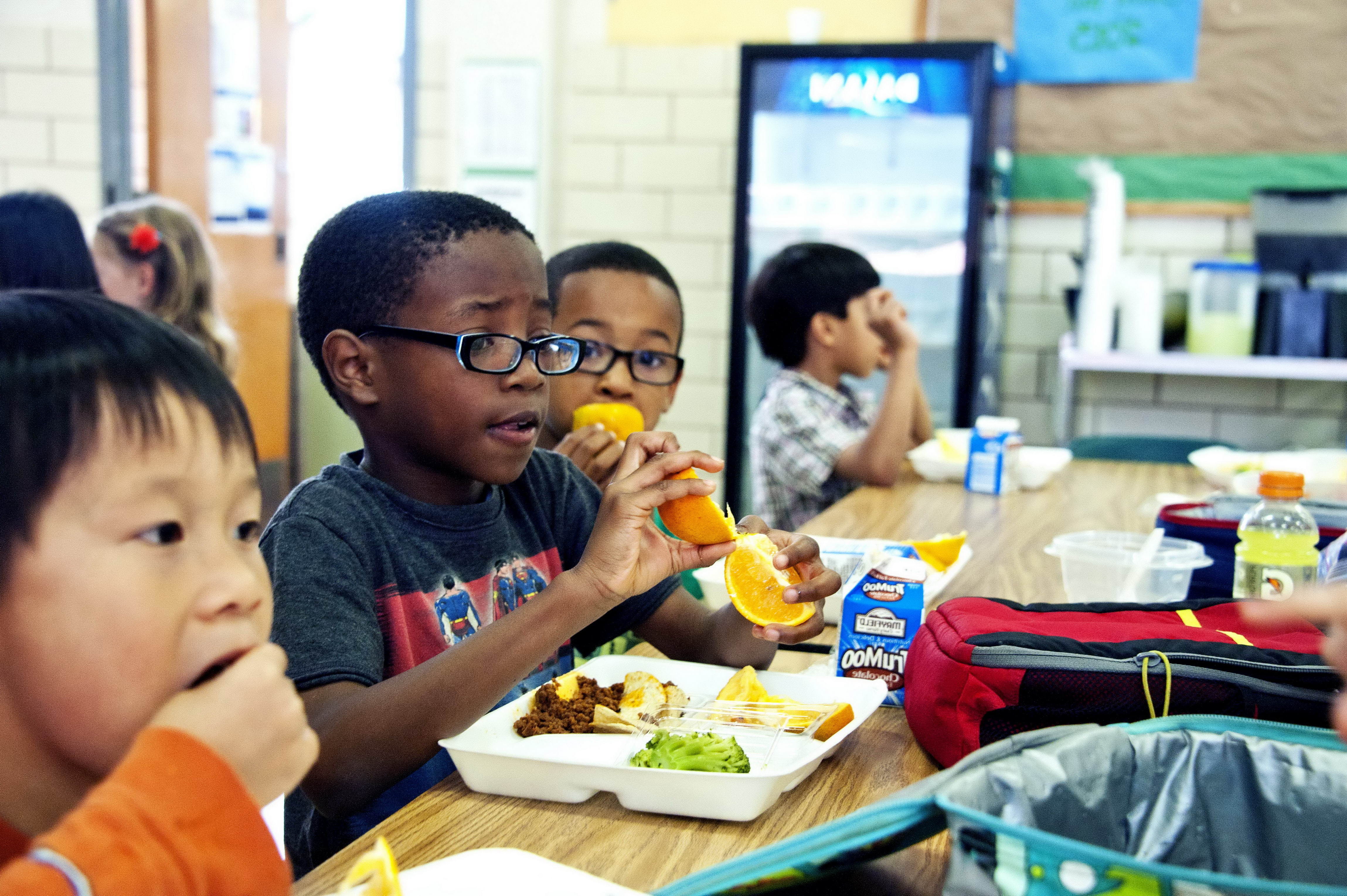
According to a 2010 TIME Health report, it’s not your imagination. And the Teal Pumpkin Project is setting out to protect those allergy-afflicted children this Halloween.
Initiated by FARE (Food Allergy Research and Education), the Teal Pumpkin Project suggests that homeowners display a teal-painted pumpkin outside to let trick-or-treaters know they’re giving out allergy-free goodies. (If you don't have the paint or the pumpkin,
FARE has provided a flyer on their website to hang from your door instead.) 
In a study funded by the National Institutes of Health, researchers found that 2.5 percent of the U.S population has food allergies—and the rates were highest (4.2%) for children ages 1 to 5. This poses a possibly grave threat during Halloween, elementary school socials, and other occasions when fun treats are abundant. “Cross-contamination can always happen,” ABC27 noted, “so parents should be sure to check candy labels, and even carry an EpiPen if their child needs one.”
Experts often attribute the rise in childhood allergies to a phenomenon described as the Hygiene Hypothesis, which suggests that “the immune system needs to come into contact with a variety of microorganisms and bacteria while it is developing at the infant stage, in order [to respond] appropriately later in life,” according to AllergyUK.org. “We now live in an environment where we use cleaners containing anti-microbial agents, and food preparation is more hygienic than ever.”
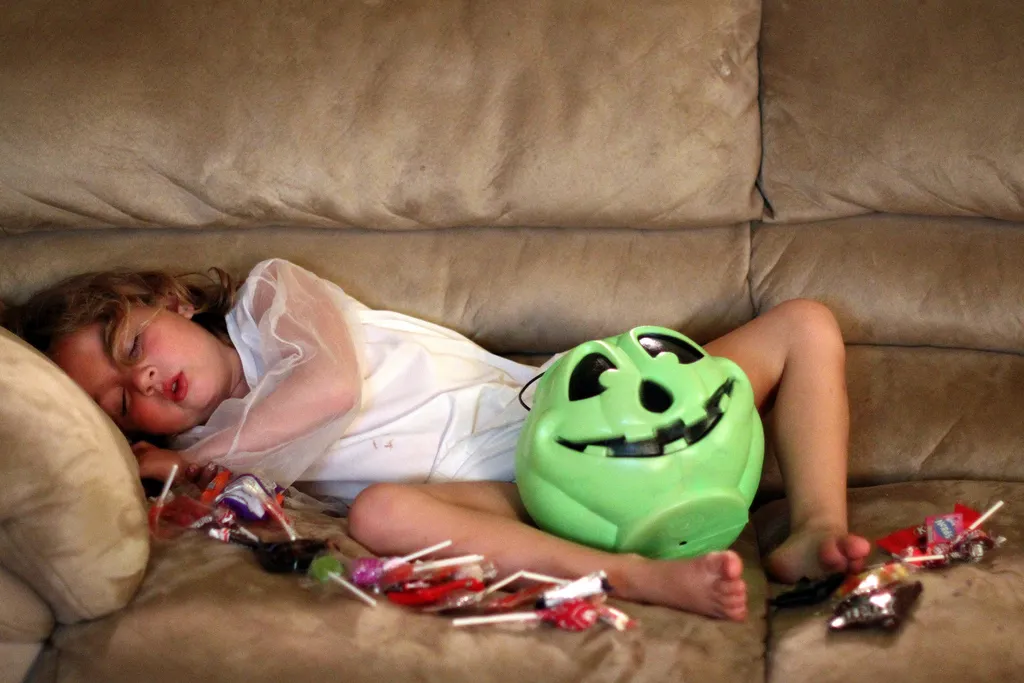
Halloween is fast approaching. Crayons, activity books, bubbles, and glow sticks are just a few examples of safe candy alternatives to pass out.