
Posted on Aug 21, 2017
You might not have heard anything about it, but there was a solar eclipse today.
In fact, it was the first time in U.S. history that a solar eclipse traveled exclusively across America, allowing for millions of people to see the moon block out the sun on Monday, August 21st.
But with the craze of this rare celestial event, you might have seen the dozens and dozens of articles, videos, and headlines warning you against looking directly into the solar eclipse because you will go blind…well at least damage your vision.
“Looking directly at the sun is unsafe…the only safe way to look directly at the uneclipsed or partially eclipsed sun is through special-purpose solar filters, such as “eclipse glasses,” NASA explains on its website.
However, these claims had several of us in the office wondering, “if it is so dangerous to look at the eclipse, what about all those mornings and nights I’ve watched a sun rise or set?”
Well turns out, there really is no difference. All these warnings are merely because people tend to stare at the sun for several minutes at a time without looking away as the moon crosses its path. While watching a sun rise or set, you typically look at the colors and the surrounding scenery more, instead of gazing deep into the fiery depths of the sun.
According to experts, viewing the sun with your naked eye during the eclipse can burn your retina, damaging the images your brain can view. Known as, “eclipse blindness”, it can cause temporary or permanent vision impairment, or even legal blindness.
However, all those tragic outcomes can occur when you stare at the sun…at any time.
So please, we hope that common sense was used across America and that non-counterfeit solar eclipse glasses were bought to witness this fantastical phenomenon that will not happen again 'till April 8th, 2024.
If you happened to witness the 2017 solar eclipse, please share with us any pictures as well as where you are! Would love to see the differences in location and how the eclipse changed.
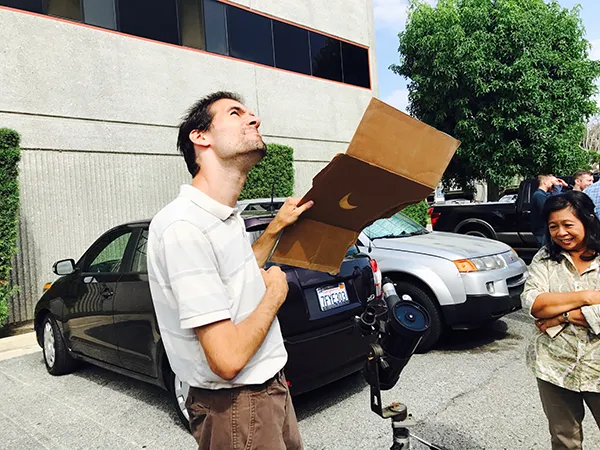
Here are just a few pictures from our Torrance, CA office viewing our 62% "Great American Eclipse". We can't wait to see yours!