Synergi HPLC Columns

synergi-logo

Full Range of Selectivity for Reversed Phase Separation

Many different mechanisms of retention are utilized within reversed-phase chromatography in order to retain and separate target analytes. Whether your compounds are hydrophobic or polar, Synergi columns provide you with a full range of selectivity, ensuring the separation of the most challenging and complex mixtures.

Order

Select a Phase to view products:

Reversed Phase

Fusion-RP

Hydro-RP

Max-RP

Polar-RP

No Separation Mode

No Phase

Full Range Selectivity

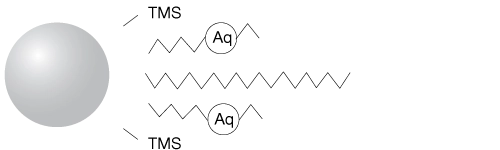
Synergi HPLC Columns four unique phases developed to provide a different selectivity for successful separations of the most complex mixtures and challenging analytes under reversed phase conditions.

  • Synergi Fusion-RP

    C18 Polar Embedded

    Balanced non-polar and polar performances

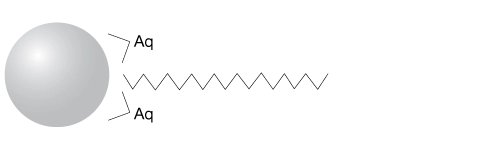
  • Synergi Hydro-RP

    C18 Polar Embedded

    Strong non-polar and polar retention

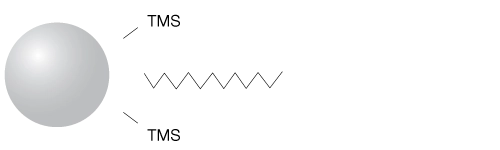
  • Synergi Max-RP

    C12 TMS Endcapped

    Excellent for basic compounds at neutral pH

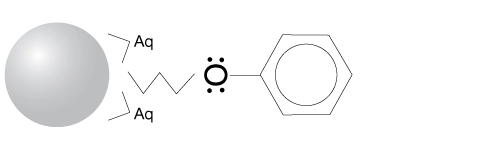
  • Synergi Polar-RP

    Phenyl Ether-Linked

    For polar and aromatic mixtures

FAQs

Chromatography is the separation of components in a mixture based on their chemical nature. Chromatography can be performed in either liquid (HPLC) or gas (GC) forms. Liquid chromatography, specifically High Pressure Liquid Chromatography (HPLC), involves a stationary phase (sorbent), a mobile phase (liquid) and the analyte or compounds of interest. Analytes or compounds of interest are injected onto an HPLC column (packed with sorbent that contains a variety of chemistries) in mobile phase. As the mobile phase, which is carrying the analyte or compounds of interest, travels across the stationary phase, the analyte or compounds of interest separate from each other as they interact with the stationary phase, each eluting from the column at various times. Gas chromatography (GC) is similar to HPLC in that is utilized with working analytes or compounds of interest that can be vaporized without decomposing. In GC, gas is used instead of a liquid (like in HPLC). As analytes or compounds of interest travel in the gas mobile phase and interact with the stationary phase, eluting at various times.
Using high pH mobile phase, the retention of polar bases will be increased. Signal response does depend upon ionization state, so if we use high pH, we are actually de-ionizing our bases and should lose sensitivity. But this doesn’t happen actually. When we increase the retention of the polar base analytes using high pH, it elutes later in the gradient run and in a high percentage of organic (acetonitrile or methanol). For example, when using formic acid, the polar base analyte peak is eluting in about 5-10% acetonitrile, but when we switch to pH 10, the polar base analyte peak is coming off in about 30-40% acetonitrile. The increased % of acetonitrile in the source is what allows the ions to be ionized thoroughly, thereby giving you a better response in ESI-MS.
When using a gradient method, no change may be made to particle size or column dimensions. They must be the same as those directed in the monograph.
In general, a column with polar selectivity, such as Synergi Fusion-RP or Kinetex Biphenyl, will preform well for pesticide/herbicide screens using LC/MS/MS.