Column Packing in Chromatography: Techniques, Types, and Step-by-Step Guide
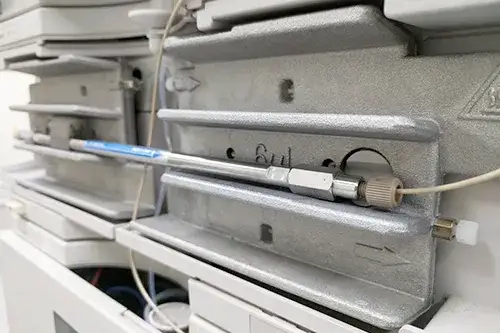
Column packing in chromatography shapes how well the column separates compounds, how evenly the mobile phase moves through the bed, and how reproducible the results remain over repeated runs. A properly packed bed supports stable flow, effective analyte interaction with the stationary phase, and the performance researchers expect in pharmaceutical, biotech, environmental, food, and academic workflows (1–3).
Beyond particle chemistry, bed structure, packing density, defect control, and post-pack evaluation also influence long-term consistency. That is why chromatography column packing remains central to both analytical and preparative methods (1, 4).
What is Column Packing and Why is it Crucial in Chromatography
Column packing is the process of arranging stationary-phase particles into a stable bed inside a column so the mobile phase can pass through a defined porous structure and produce effective separation. In practical terms, it means filling the column in a controlled way that limits defects, supports predictable flow paths, and creates the mass-transfer environment needed for good resolution.
The packed bed is not a passive filler; it determines inter-particle void space, pore accessibility, and local flow behavior, all of which influence how compounds travel, interact, and elute from the column (1–4). Proper column packing is critical because a non-uniform bed can create channels, dead zones, local velocity differences, and structural defects that reduce efficiency.
Column-packing principles apply across analytical, preparative, and process-scale chromatography, but the practical packing method, pressure limits, qualification tests, and acceptance criteria depend strongly on column format, particle/resin type, and the intended application.
Academic and process-scale studies consistently link packing heterogeneity to band broadening, peak asymmetry, reduced separation efficiency, and weaker reproducibility, whereas stable bed architecture supports reproducible pressure-flow behavior, more reliable method transfer, and stronger performance in both analytical and process-scale workflows (1, 2, 4–6).
Types of Column Packing
Column packing methods differ in how particles are introduced, consolidated, and stabilized inside the column. The right choice depends on resin rigidity, particle shape, column scale, hardware, and whether the goal is routine lab work, process development, or large-scale production (1, 2).
Dry Packing
Dry packing introduces a dry stationary phase into the column first, then wets and settles the bed during solvent flow. This method is simple and familiar in some bench workflows, but it can be more sensitive to uneven settling, trapped air, and bed defects if the operator does not manage wetting and leveling carefully (2, 7).
Slurry (Wet) Packing
Slurry packing suspends the stationary phase in a suitable solvent and transfers that suspension into the column before controlled flow or pressure consolidates the bed. This approach is widely favored because it can produce more efficient, more stable beds when slurry solvent choice, concentration, and settling behavior are controlled well, making it central to column packing in many LC workflows (2, 3).
High-Pressure Mechanical Packing
High-pressure packing uses controlled pressure to create a dense, stable bed, especially in high-efficiency analytical columns. The literature emphasizes that stable high-resolution separations depend on effective packing under pressure, but also warns that poor method choice or defect formation can still create inhomogeneous regions even when overall bed density is high (3, 5).
AXIA Packing
AXIA packing is Phenomenex’s proprietary preparative LC packing technology based on a single axial compression step. Unlike conventional preparative packing approaches, the AXIA process uses computer-controlled packing to custom-calculate target bed density for each media and column size, supporting consistent bed density and column uniformity. This helps reduce risks associated with decompression/recompression, media damage, bed collapse, and column-to-column variability in preparative LC workflows (7).
Packing Materials Used in Chromatography
Material choice is just as important as packing technique in liquid chromatography LC column packing because particle size, porosity, rigidity, and surface chemistry define both selectivity and hydrodynamic behavior. Modern chromatography relies on a broad materials toolkit that includes porous silica, specialty inorganic supports, polymeric structures, and newer engineered materials designed to balance efficiency against backpressure (9, 10). Material selection should consider not only selectivity, but also particle rigidity, compressibility, pore structure, pressure tolerance, pH stability, and compatibility with the intended analyte class and instrument format.
Silica Based
Silica-based materials remain foundational because they offer strong mechanical properties, high surface area, and broad compatibility with bonded stationary phases used in liquid chromatography. Research on modern packing design continues to show that particle size strongly influences efficiency, while shrinking particle size can improve performance but also raises backpressure and hardware demands (9).
Polymer Based
Polymer-based materials are useful when method conditions demand different chemical stability, selectivity, or mechanical behavior than silica can provide. They can support targeted applications where pH tolerance, macromolecule handling, or alternative interaction profiles are more important than purely maximizing classical silica-based efficiency (9, 10).
Specialty Packing Materials
Specialty materials include carbon-coated or composite supports, controlled-pore glass media, and other engineered particles designed for specific retention behavior or structural advantages. These materials expand method developers’ options when they need high surface area, unusual selectivity, or better performance for difficult analytes and advanced separation goals (1, 10).
Step-by-Step Chromatography Column Packing Process
Anyone asking how to pack a chromatography column should think of packing as a controlled sequence rather than a single fill step, especially when working with an HPLC column. The bed must be prepared, formed, consolidated, conditioned, and tested so the final structure supports reliable separation and does not shift during use (1, 2, 6).
Always follow the column hardware and media manufacturer’s packing instructions, because recommended slurry solvent, concentration, compression factor, maximum pressure, and test conditions vary by media and column format.
Column Preparation
Start with a clean column, appropriate fittings, and a hardware setup that matches the resin, solvent system, and operating scale. Proper preparation includes checking flow direction, adapter placement, tubing, seals, and any dead-volume risks before the stationary phase enters the system (2).
Preparation of Stationary Phase Slurry
For slurry-based workflows, suspend the stationary phase in a suitable solvent at a concentration that promotes uniform transfer and controlled settling. The literature repeatedly emphasizes that slurry solvent selection is a key best-practice variable because it affects aggregation behavior, bed formation, and final stability, which makes it central to step-by-step chromatography column packing (2, 3).
Filling and Packing the Column
Transfer the slurry into the column carefully, then apply the selected flow or pressure protocol to begin bed formation. Process-scale methods may use reverse flow to fluidize or resuspend the bed, followed by forward flow to consolidate it, while other approaches may rely on direct high-pressure packing or simpler wet-pack procedures depending on the hardware (1, 2).
Compression and Settling of the Packed Bed
Once particles are in place, the bed must settle and compress into a stable structure with minimal voids and limited heterogeneity. This stage is where repeated flow cycles, stop-flow steps, or controlled pressure application can improve consolidation and reduce the risk of headspace or later bed collapse (1, 2, 4).
Conditioning and Equilibration
After the bed is formed, condition it with the intended solvent or packing buffer until the system stabilizes. This step helps establish the working flow profile, remove loosely retained material, and prepare the bed for analytical or preparative use (1, 2).
Performance Testing
Packed columns should always be verified before use. Quality checks such as HETP, asymmetry, variance-based evaluation, or tracer monitoring confirm whether the bed is homogeneous enough for dependable performance and whether the column meets routine acceptance criteria (1, 2, 6). The column’s performance should be checked using a non-retained tracer or suitable standard under defined conditions. The same test conditions should be maintained over time because flow rate, tubing, temperature, eluent, sample load, and extra-column volume can all influence measured efficiency and asymmetry.
Troubleshooting Common Problems in Column Packing
Troubleshooting chromatography column packing problems starts with separating bed-structure issues from mobile-phase or injection-related causes. Channeling, voids, collapse, backpressure spikes, peak distortion, and poor reproducibility often point to defects in the packed bed itself rather than to chemistry alone (1, 4, 5, 11).
Channeling
Channeling happens when the mobile phase follows preferential paths through the bed instead of moving evenly through the stationary phase. To reduce it, review packing uniformity, check for air entrapment, and confirm that the selected flow or pressure protocol fully consolidates the bed before use (1, 5).
Void Formation
Void formation creates local empty regions inside or near the head of the bed, which can distort flow and generate split peaks or poor symmetry. A practical fix is to repack the column, inspect the adapter and seals, and verify that the slurry or dry-fill step did not leave trapped spaces or uneven settling behind (4, 11).
Bed Collapse
Bed collapse occurs when a poorly consolidated bed continues to settle during operation and creates headspace over time. The most effective response is to improve front-end packing quality, use controlled compression or settling steps, and confirm bed stability with a post-pack performance check before routine use (1, 2).
High Backpressure
Backpressure often rises when the bed is too dense, fouled, or packed with particles that create severe resistance under the chosen conditions. To address it, confirm particle size suitability, review solvent compatibility, and check whether the bed was over-compressed or whether fouling has developed during operation (9).
Peak Distortion
Peak distortion may show up as tailing or fronting, and it often reflects irregular bed density or flow inhomogeneity. A good first step is to separate bed-related causes from extra-column effects, then adjust packing uniformity or swap to a more stable packing method if the issue persists (5, 11).
Poor Reproducibility
Poor reproducibility is usually a byproduct of packed-bed inconsistency drifting over time. Monitoring variance, asymmetry, and acceptance metrics helps labs detect changes early, and standardized packing procedures help prevent the same problem from recurring (6).
Advantages of Proper Column Packing
Proper column packing in chromatography improves separation efficiency, supports better peak shape, and reduces dispersion caused by structural defects in the bed. Studies on packing microstructure and process performance show that defect-free or better-controlled packings give stronger chromatographic efficiency and more stable beds than columns with higher heterogeneity or weaker consolidation (1, 3, 5).
Well-packed columns also improve reproducibility and make analytical or preparative workflows easier to trust. This matters in method development, regulated manufacturing, and day-to-day laboratory operations because a stable bed supports consistent retention behavior, better transferability, and fewer corrective interventions over the life of the column (1, 2, 6).
Best Practices for Column Packing
Strong column packing practice starts with matching the packing method to the resin, scale, and hardware. Slurry solvent choice, controlled consolidation, and attention to mechanical stability all matter, and literature suggests that homogeneous packing is more important than chasing maximum density alone when the higher-density result contains defect sites or inhomogeneous regions (1, 2, 3, 5).
Standardized procedures also help. Teams should document packing conditions, verify bed quality with performance metrics, and monitor packing behavior over time so acceptance decisions are based on evidence rather than routine assumption. That approach improves consistency and supports the broader importance of column packing in chromatography across research, QC, and manufacturing environments (1, 6).
FAQs on Column Packing in Chromatography
What materials are used in chromatography column packing?
Chromatography columns can use silica-based particles, polymer-based media, controlled-pore glass resins, and specialty composite or carbon-coated materials depending on the target analytes and method goals. Particle size, porosity, and surface chemistry all influence efficiency, selectivity, and backpressure, so material choice should match both separation needs and instrument capability.
Can chromatography column packing be performed manually?
Yes. Manual packing is common in smaller lab workflows, especially for dry or slurry-packed columns, but it requires careful control of wetting, filling, leveling, and defect avoidance. At larger scales or higher efficiency demands, more controlled flow-based or pressure-based packing approaches are often preferred because they improve consistency and reduce bed heterogeneity.
References
- Siu, S. C., Chia, C., Mok, Y., & Pattnaik, P. (2014). Packing of large-scale chromatography columns with irregularly shaped glass based resins using a stop-flow method. https://pmc.ncbi.nlm.nih.gov/articles/PMC4283707/
- Frank, K., Bernau, C. R., & Buyel, J. F. (2022). Spherical nanoparticles can be used as non-penetrating tracers to determine the extra-particle void volume in packed-bed chromatography columns. https://publications.rwth-aachen.de/record/849394/files/849394.pdf
- Bristow, P. A., & Knox, J. H. (2006). The art and science of forming packed analytical high-performance liquid chromatography columns. https://pubmed.ncbi.nlm.nih.gov/16697390/
- Zhang, K., et al. (2022). On the journey exploring nanoscale packing materials for ultra-efficient liquid chromatographic separation. https://www.sciencedirect.com/science/article/pii/S2772391722000044
- ACD/Labs. (2023, July 19). An introduction to peak tailing, fronting and splitting in chromatography. https://www.acdlabs.com/blog/an-introduction-to-peak-tailing-fronting-and-splitting-in-chromatography/
- Pesek, J. J., & Matyska, M. T. (2010). Preparation and evaluation of carbon coated alumina as a high surface area packing material for high performance liquid chromatography. https://pmc.ncbi.nlm.nih.gov/articles/PMC3004430/
- Phenomenex. (2026). Axia preparative LC columns. https://www.phenomenex.com/products/axia-preparative-lc-column
- Sciarrone, D., et al. (2022). Prediction of the performance of pre-packed purification columns using machine learning. https://pmc.ncbi.nlm.nih.gov/articles/PMC9310636/
- Shalliker, R. A., et al. (2006). How does column packing microstructure affect column efficiency in liquid chromatography? https://pubmed.ncbi.nlm.nih.gov/16806247/
- Rathore, A. S., et al. (2005). Evaluating and monitoring the packing behavior of process-scale chromatography columns. https://www.sciencedirect.com/science/artice/abs/pii/S0021967305002980