LC-MS Sample Preparation: MS-Specific Considerations, Step-by-Step Methods, and Applications
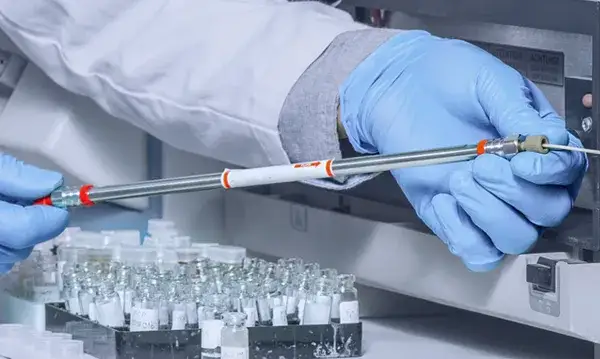
Liquid chromatography-mass spectrometry (LC-MS) sample preparation sits at the center of trustworthy LC-MS data because the mass spectrometer reacts strongly to salts, particulates, detergents, and other coextracted materials that simpler detectors may tolerate.
Good sample prep improves analyte recovery, lowers background noise, and helps labs get sensitive, reproducible results across pharmaceutical, biotech, environmental, food, and academic workflows. It also shapes how well LC-MS applications perform in real labs, where matrix complexity often decides whether a method succeeds or struggles.
What is LC-MS Sample Preparation?
LC-MS sample preparation is the set of steps used to collect, extract, clean, dilute, and ready a sample before it enters an LC-MS system. The goal is simple: remove components that can interfere with ionization, keep the analyte stable, and present the sample in a solvent system the instrument can tolerate. This matters because LC-MS methods depend on both chromatographic separation and efficient ion formation, so poor preparation can lower the signal, distort quantitation, or contaminate the instrument.
That is why labs pair thoughtful prep with the right liquid chromatography, a suitable HPLC column, and a cleanup strategy that matches the matrix and analyte chemistry. Strong sample preparation for LC-MS analysis also helps analysts meet the stricter cleanliness and compatibility requirements that MS detection imposes, which directly supports method robustness and long-term instrument reliability.
How LC-MS Sample Preparation Differs from LC with Other Detectors
Mass spectrometers demand cleaner samples than UV, fluorescence (FLD), evaporative light scattering (ELSD), and refractive index (RI) detectors because ionization efficiency changes when matrix components enter the source. A UV method may tolerate buffers or sample residues that become a direct problem once the detector is a mass spectrometer.
Ion Suppression and Matrix Effects
Matrix effects occur when co-eluting compounds change ion formation and push the signal lower or higher than expected. ESI sources are especially vulnerable because the ionization process happens at atmospheric pressure, and any co-extracted material present in the spray can compete directly with the analyte for charge. That vulnerability is one reason why LC-MS method developers treat sample cleanup as a quantitative performance issue, and not just a housekeeping step. The best way to control matrix effects is to choose an extraction or cleanup strategy that removes as many co-extractants as possible and to evaluate matrix effects explicitly during method validation.
Buffer and Salt Compatibility
LC-MS generally requires volatile acids, salts, and solvents because non-volatile materials can suppress the signal and foul the source. Established mass- spectrometry facilities specifically warns that electrospray systems are compatible with volatile organic solvents and water, and that high inorganic salt concentrations are not compatible with electrospray ionization (ESI). That is a key difference from many non-MS LC methods.
Cleanliness Thresholds
Particulates, cloudy solutions, and precipitates are not small housekeeping issues in LC-MS. They can block lines, raise backpressure, add chemical noise, and contaminate the system. That stricter cleanliness threshold is one of the clearest ways sample preparation for LC-MS differs from conventional detector workflows.
Solvent, Labware, and Additive Purity
Plasticizers, detergents, dirty glassware, and low-purity solvents can all show up in mass spectra as unwanted background signals. Labs need MS-grade solvents and low-bleed consumables, and they often avoid additives such as trifluoroacetic acid (TFA) or ion-pairing agents when those agents interfere with ionization or contaminate downstream analyses.
Use of Internal Standards
Internal standards matter in many analytical workflows, but they are especially valuable in LC-MS because they help track variability introduced during extraction, cleanup, and ionization. Stable isotope-labeled internal standards are widely preferred in quantitative LC-MS/MS because they move through preparation and analysis with the target analyte and can compensate for sample-to-sample variation.
Step-by-Step LC-MS Sample Preparation Workflow
A clear, sequential LC-MS sample preparation workflow helps labs reduce variability, protect the instrument, and Improve reproducibility from run to run.
Sample Collection and Handling
Samples should be collected in a way that limits degradation, contamination, and changes in composition before extraction begins. For unstable analytes, storage conditions, container choice, and timing matter as much as the chemistry of later prep steps. Biological fluids, environmental samples, and food matrices each carry unique handling risks that need to be addressed at this stage. Analyte stability depends on controlling factors such as temperature, pH, light exposure, and contact with reactive surfaces so that the target compound does not degrade before analysis begins.
Sample Extraction
Extraction separates the analyte from the bulk of the sample matrix and should be matched to analyte polarity, matrix type, and sensitivity targets. Depending on the methodsample matrix, analysts use protein precipitation, QuEChERS, phospholipid removal, liquid–supported liquid extraction (LSLE), or solid-phase extraction (SPE) to pull analytes away from interfering material. This step is where the broader sample preparation strategy begins to shape final method performance.
Filtration
After extraction and before the sample reaches the column, filtration serves as a final protection step for the LC-MS system. Even with good extraction, fine particulates or reprecipitated material can survive into the injected sample, where they block frits, raise backpressure, or add noise. A simple syringe filter or validated in‑line filter at this stage helps protect hardware and keep routine performance stable, especially in high-throughput LC‑MS workflows.
Control of matrix components that drive ion suppression occurs primarily in the extraction and cleanup, while filtration at this stage focuses on removing any remaining particulates that could damage hardware or destabilize the run.
Concentration and Dilution
Concentration and dilution bring the sample into the right working range for both chromatographic separation and MS detection. Over-concentrated samples raise chemical noise and can harm resolution, while poor dilution choices reduce analyte response or cause precipitation in the vial. The right balance here directly affects how accurate and reproducible the final result will be.
Final Sample Preparation for Injection
The last step is confirming that the sample is compatible with the LC-MS system before the sequence begins. This means verifying solvent compatibility, checking sample clarity, confirming vial cleanliness, and making sure the injection volume and concentration are appropriate for the method. The sample solvent must both dissolve the analyte and remain compatible with the LC starting conditions, since poor solvent selection can lead to peak distortion, early elution, precipitation in the vial, or unstable injections. Skipping this check is one of the easiest ways to introduce avoidable errors into an otherwise well-designed LC-MS analysis preparation workflow.
Common LC-MS Sample Preparation Techniques
Choosing the right technique depends on the sample matrix, analyte chemistry, and how much cleanup the method needs. Each approach in LC-MS sample preparation offers a different balance of throughput, selectivity, and recovery.
Protein Precipitation (PPT)
Protein precipitation is one of the fastest approaches for biological matrices and works well when labs need simple, high-throughput cleanup. An organic solvent or acid is added to the sample, proteins are crashed out of solution, and the supernatant is injected after centrifugation or filtration. It is a good starting point, but extracts may still carry matrix components that affect ionization, so it is not always the best sample preparation method for LC-MS when maximum cleanliness is required.
Solid-Phase Extraction (SPE)
SPE gives more selective cleanup and can improve both sensitivity and reproducibility by retaining analytes on a sorbent while washing away interferents before elution. SPE is widely used in pharmaceutical, clinical, and environmental methods where the additional selectivity it provides makes it the preferred technique over protein precipitation for regulated or trace-level work.
Liquid–Liquid Extraction (LLE)
LLE separates analytes by differential solubility between aqueous and organic phases, and it remains a practical option when analyte and matrix chemistry support strong partitioning. Supported liquid extraction is based on the same principle but performs the partitioning in a solid medium such as diatomaceous earth, which allows higher-throughput processing and often yields cleaner extracts than traditional LLE in LC-MS workflows.
QuEChERS
QuEChERS and dispersive SPE workflows are widely used for multi-residue analysis in food and environmental matrices because they combine salting-out extraction with a fast cleanup step. They are designed to handle complex, high-fat or high-pigment samples where a simple protein precipitation or LLE approach would leave too much matrix behind for reliable LC-MS quantitation.
Phospholipid Removal
Phospholipid removal plates and cartridges provide targeted cleanup for plasma and serum by selectively retaining phospholipids, which are major contributors to matrix effects in ESI-based LC-MS assays. This focused cleanup improves signal stability and reduces ion suppression for small-molecule methods that measure analytes at low concentrations in blood-derived matrices.
Filtration Techniques
Filtration is used at the end of the extraction workflow to remove any remaining particulates before the sample enters the LC-MS system. Membrane material choice matters here: some polymeric membranes release extractables at trace levels that register as background peaks in the mass spectrum, so labs typically use membranes validated for MS compatibility. Pore size selection should also account for the particle load in the extract, since an undersized pore can shorten filter life and slow throughput.
Common Challenges in LC-MS Sample Preparation and Solutions
Even well-designed LC-MS sample preparation workflows run into practical problems. Knowing the most common ones makes them easier to fix fast.
Matrix Interference
Matrix interference shows up most often in biological, food, and environmental samples where the analyte shares retention time with endogenous compounds. Switching to a more selective extraction technique, adjusting LC gradient conditions, or adding a stable isotope-labeled internal standard are the most reliable solutions.
Sample Loss
Aggressive cleanup can cause sample losslow recovery when the analyte adsorbs to sorbents, filter membranes, or labware surfaces. The fix is to optimize extraction conditions, use low-binding consumables, and test recovery at each cleanup step rather than assuming that more cleanup always gives better results.
Contamination Issues
Contamination often traces back to low-purity solvents, dirty labware, non-volatile buffers, or particulates that survive filtration. Dirty extracts also increase background noise, reduce reproducibility, and raise the frequency of source cleaning and maintenance, so cleanliness during preparation affects both data quality and instrument uptime. Labs can reduce contamination risk by using MS-grade solvents, verifying sample clarity before injection, and avoiding additives that are not compatible with the detector's ion source.
Poor Reproducibility
Reproducibility usually improves when the prep protocol is standardized, extraction conditions are tightened, and each step is matched to matrix behavior. Using internal standards, tracking recovery across batches, and documenting every prep variable gives analysts the information they need to find the root cause of variation and reduce it systematically.
FAQs on LC-MS Sample Preparation
Why is sample cleanup important in LC-MS?
Cleanup removes matrix components that can suppress ionization, increase background noise, contaminate the source, and reduce reproducibility. In routine work, better cleanup often means better sensitivity, fewer maintenance interruptions, and more reliable quantitation.
What are the applications of LC-MS?
LC-MS applications span pharmaceutical research, clinical analysis, metabolite studies, product characterization, and other analytical tasks that require sensitive and selective measurement. In practice, food and environmental samples are often prepared using QuEChERS or similar multi-residue workflows; clinical and bioanalytical samples typically rely on protein precipitation, SPE, or SLE with additional phospholipid removal; and pharmaceutical or metabolite studies frequently use SPE- or LLE-based cleanup tailored to the specific matrix and analyte chemistry.
How does sample preparation affect LC-MS results?
Sample preparation controls how much analyte is recovered from the matrix and how stable the sample is during injection, which directly influences the accuracy and precision of LC-MS measurements. Inadequate or inconsistent prep can cause low or variable recovery, unexpected carryover, precipitation in the vial or on the column, and shifts in retention time, all of which complicate quantitation and method robustness. When the workflow is optimized for the matrix and analyte chemistry, sample preparation supports stable injections, predictable chromatographic behavior, and more reliable calibration and quality control performance over time.