Sample Preparation Techniques for Precision in Analysis
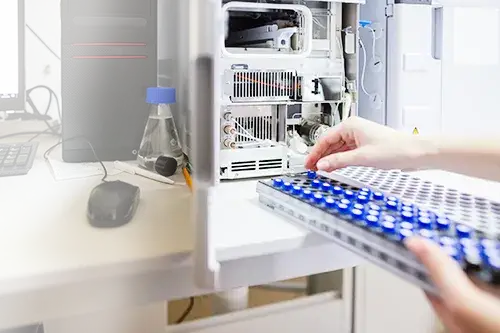
Sample preparation is a critical step in the analytical process, transforming raw samples into analysis-ready materials that significantly impact downstream applications. Mastering sample preparation is essential for producing high-quality, reliable data across various fields, such as environmental monitoring, pharmaceutical development, food safety testing, forensic analysis, and research.
Proper preparation ensures that samples accurately represent the substance being analyzed, free from contamination or background interferences. Consistent sample preparation methods enable reproducibility, allowing experiments to be reliably replicated by different labs or on different days. Sample preparation also enhances sensitivity, because detecting trace substances is crucial across forensic, clinical research, pharmaceutical testing and more. Streamlining the preparation process reduces time and resources, making analysis more efficient and cost-effective.
This article provides an in-depth exploration of sample preparation techniques, covering their principles, applications, and best practices to facilitate informed decision-making and optimal analytical outcomes.
Types of Sample Preparation Techniques
Sample preparation techniques can be categorized into several types based on the sample state and analytical requirements.
Solid Sample Preparation Techniques
Homogenization and Grinding: Homogenization and grinding involve breaking down large particles into a uniform mixture to ensure representative sampling, using methods such as mechanical grinding with ball mills or mortar and pestle, cryogenic grinding with liquid nitrogen, or ultrasonic homogenization.
- Drying: Drying removes moisture from samples to prevent interference with analysis, through methods including oven drying, freeze-drying, vacuum drying, and spray drying.
- Solid-Phase Extraction (SPE): The solid-phase extraction technique selectively retains analytes by retaining target analytes using solid sorbents, including reversed-phase sorbents like C18, normal-phase sorbents like silica, and ion-exchange sorbents like quaternary amine. A weak wash can be utilized to remove weakly bound sample impurities before a strong wash solvent releases the analytes for further analysis.
- Solid-Phase Microextraction (SPME): SPME is a solvent-free extraction technique that uses fiber-based or in-tube SPME to extract analytes from samples.
- Protein Precipitation: A technique in clinical research labs, proteomics or drug discovery labs to separate proteins from a solution or complex mixture. The process involves loading sample onto a media, mixing or centrifugation and vacuum extraction to remove the sample protein free. This can also be done in a tube with solvents but requires more centrifugation and precision in pipetting. Additionally, protein precipitation plus phospholipid removal products allow for simultaneous removal of proteins and phospholipids for improved MS results.
Liquid Sample Preparation Techniques
Dilution and Filtration: Dilution and filtration involve reducing analyte concentration and removing particulate matter from liquid samples using membrane filtration, glass fiber filtration, or centrifugation.
- Liquid-Liquid Extraction (LLE): LLE separates compounds based on solubility in two immiscible liquids, using techniques such as separatory funnel extraction or continuous liquid-liquid extraction.
- Supported/Solid Liquid Extraction (SLE) or called Liquid-Solid Extraction: Liquid-solid extraction transfers analytes from liquid to solid phase using solid-phase extraction or liquid-solid chromatography.
- Dialysis: Dialysis separates molecules based on size through diffusion across semi-permeable membranes.
Other Sample Preparation Techniques
QuEChERS:
QuEChERS (Quick, Easy, Cheap, Effective, Rugged, and Safe) is a sample preparation technique commonly used in analytical chemistry for food and environmental analyses. QuEChERS is favored for its simplicity, speed, and cost-effectiveness, making it ideal for high-throughput laboratories analyzing complex matrices like fruits, vegetables, and other food products.
Microwave-Assisted Extraction:
Microwave-Assisted Extraction (MAE) uses microwave energy to heat the solvent and sample, causing rapid thermal effects that enhance the extraction of target compounds. The microwave radiation penetrates the sample, leading to the vibration of polar molecules, which generates heat. This heating process disrupts the cell walls of plant or biological material, allowing faster and more efficient release of analytes into the solvent.
Ultrasonic-Assisted Extraction:
Ultrasonic-Assisted Extraction (UAE) employs high-frequency sound waves (ultrasound) to disrupt the cell structure of the sample material. Ultrasound causes cavitation (the formation of microbubbles) in the liquid, which collapses violently, generating localized high pressure and temperature. This leads to the breakdown of the sample matrix, enhancing mass transfer between the solvent and analyte.
Supercritical Fluid Extraction:
Supercritical Fluid Extraction (SFE) involves using fluid at its supercritical state (above its critical temperature and pressure) to extract analytes. In this state, the fluid exhibits properties of both a gas and a liquid, allowing it to diffuse like a gas and dissolve substances like a liquid.
Pressurized Liquid Extraction:
Pressurized Liquid Extraction (PLE), also known as accelerated solvent extraction (ASE), uses solvents at elevated and high pressures to extract analytes from solid or semi-solid matrices. Under these conditions, the solvent's viscosity and surface tension are reduced, improving its ability to penetrate the sample matrix and dissolve the analytes more efficiently.
Immunocapture:
A technique that uses antibodies to selectively isolate and concentrate specific target molecules, such as proteins, from a complex mixture. This method leverages the high specificity of antibodies for their antigens (target molecules) to achieve purification and enrichment of the target, which can then be analyzed or further processed.
Optimizing and Implementing Sample Preparation Techniques
Validating and optimizing sample preparation methods is crucial to ensure accuracy, precision, and reliability. This involves evaluating several parameters, including recovery, precision, accuracy, robustness, and selectivity. Method validation protocols typically involve verifying the method's performance characteristics, such as detection limits, quantitation limits, and linearity.
Optimization techniques, such as experimental design and response surface methodology, help refine the sample preparation process. These approaches enable analysts to systematically evaluate the effects of various factors, including extraction solvent, temperature, and time, on the method's performance.
Even with validated and optimized methods, several issues may arise during sample preparation.
- Contamination can occur through improper handling, storage, or equipment cleaning, leading to inaccurate results.
- Analyte loss, low recovery, or degradation can result from inadequate stabilization, storage, or handling procedures.
- Inconsistent results may stem from variations in the sample matrix, instrumentation, wrong solvent/phase selection, or operator technique.
- Instrument malfunctions can compromise results.
To address the common challenges in sample preparation, laboratories should identify root causes and apply corrective measures, such as re-examining sample handling and storage procedures, verifying instrument calibration, or adjusting method parameters. Additionally, following best practices and safety considerations is crucial to prevent accidents and ensure a safe working environment. This includes wearing personal protective equipment (PPE) and adhering to laboratory safety protocols for waste disposal and chemical handling.
Regular quality control measures are also vital to ensure reliable results. Laboratories should implement standard operating procedures (SOPs), verify reagent purity and stability, monitor environmental conditions, and maintain instruments through regular calibration and maintenance. Furthermore, continuous training and competency assessment for laboratory personnel are essential.
Implementation of these measures is crucial for laboratories to ensure the quality and reliability of their sample preparation methods, ultimately supporting accurate and meaningful analytical results.
Conclusion
Robust sample preparation has proven instrumental in fields like environmental monitoring (e.g., detecting isolating pollutants using SPE), pharmaceutical development (e.g., bioanalytical testing with LLE and SPME), and food safety clean-up (e.g., QuEChERS for pesticide residue analysis).
As analytical chemistry evolves, emerging trends like automation, miniaturization, and green chemistry will further enhance efficiency, sensitivity, and sustainability for sample preparation techniques. Ultimately, high-quality sample preparation is essential for delivering accurate, reliable, and groundbreaking research outcomes.