
Analysis of Bases – The Chromatography Method of the Old and New
Basic compounds have long been a challenge for chromatographers. Reversed phase separation offers a flexible and effective way to separate compounds based on hydrophobicity. Bases pose specific challenges due to their ability to undergo strong secondary interactions with the base silica of C18 columns typically used for RP separations. Column manufacturers have developed different strategies over time in order to facilitate chromatographers needs for symmetrical peak shapes when working with challenging basic compounds. Here I will attempt to provide a summary of this approaches, from distance history to the present day.
Early reversed phase columns were based on “type A” silicas, these materials had substantial metal contamination, causing the silanol groups on the surface of the silica to have greater and more variable activity. Manufacturers endcapped the materials as far as possible after bonding with C18 reagents, in an attempt to reduce the number of sites where ion exchange could take place. However basic compounds would generally tail badly. Some approaches taken by chromatographers to reduce this include:
- Working at low pH, this approach aims to neutralise the silanol groups on the silica surface, preventing ion exchange from taking place.
- Adding a competing base (or silanol suppressor) to the mobile phase, regents like TEA at 5 mM concentration would typically be used. The idea here is that the competing base associates with the silanol groups, reducing their availability to interact with analytes. This approach, whilst successful generally leads to short column lifetime as the silanol suppressors also tend to cause more rapid column stationary phase and endcapping hydrolysis – this in turn exposes more silica allowing for more tailing to occur.
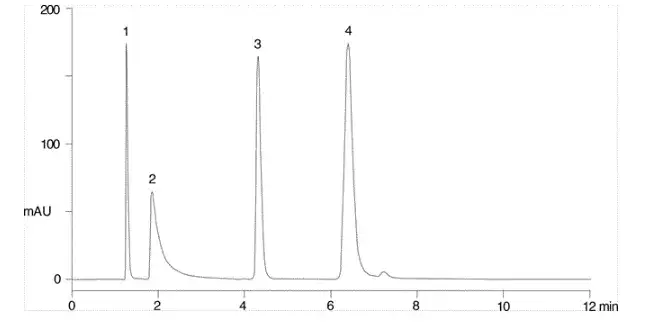
Peak 2 – benzylamine, run at pH 2.5 on a type A silica C18 column
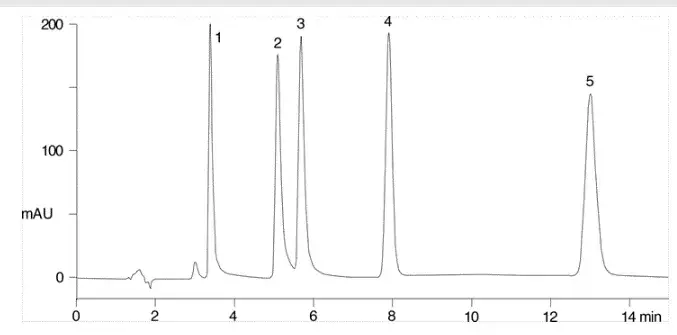
Benzodiazepams run at pH 3.0 on a type A silica C18, but with the addition of TEA to improve peak shape
A refinement from manufactures was the introduction of base deactivated (BDS) columns. This approach would typically involve taking a type A silica material and cleaning it up to remove surface metal contamination. A solution of phosphoric acid, for example, can be used as a sequestering agent to remove surface metal ions prior to the material being bonded and subsequently endcapped. These materials would typically show better peak shape than “untreated” type A silica materials.
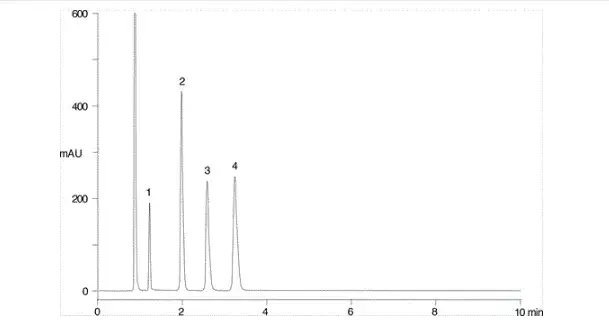
Basic drugs run on a C8 “BDS” column (pseudoephedrine, lidocaine, pyrilamine and chlorpheniramine) run at pH 2.5, no requirement for a competing base.
The next major advancement was the introduction of ultra pure silica materials, often referred to as “type B” silicas. Manufactured using ultrapure reagents these silicas contain low ppm quantities of metal ions. Homogeneity of the silica particles helps ensure the uniformity of silanol activity at the silica surface, allowing for the stationary phase to be more evenly distributed across the bonded surface. Materials are produced with better bonded phase coverage, with consist levels of endcapping. Tailing of basic compounds is greatly reduced, as is the potential for the loss of compounds with the ability to chelate to metals. When using Type B materials the requirement for silanol suppressing agents is removed, the majority of methods still utilise low pH as a means to prevent ion exchange interactions.
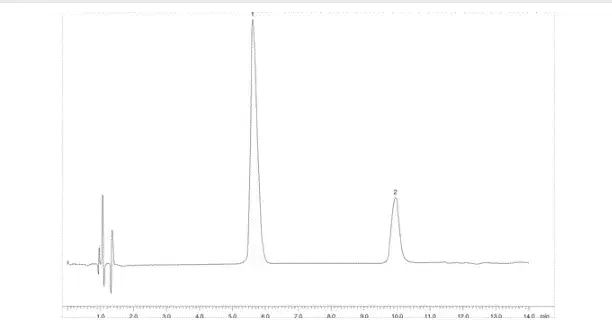
Lidocaine run on a type B silica, acidic mobile phase conditions
The 21st century saw the development of hybrid materials, with the ability to greatly extend the high pH stability of HPLC sorbents. This new development allowed users to use high pH to deprotonate basic compounds, increasing their hydrophobicity (and hence retention) whilst also removing the possibility of ion exchange. This approach is particularly useful when considering polar basic compounds as the combination of good peak shape with enhanced retention is useful, especially in LC-MS/MS where elution under higher organic mobile phase conditions has been shown to be beneficial for peak response.
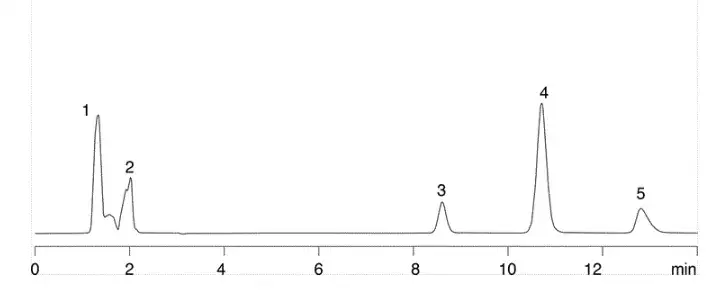
Lidocaine (peak 3) run at pH 12 on a Twin technology, high pH stable material, note the increase in retention by running with a neutral and therefore more hydrophobic analyte.
The most recent development is the production of C18 columns with a residual positive charge on the base silica. This combination allows for basic compounds to be retained via van der waals forces as would normally be the case, it also prevents positively charged bases from interacting ionically with silanol groups due to charge repulsion at the silica surface. The net result is that basic compounds can be retained and eluted with good peak shape under acidic conditions, which are generally favoured, especially when utilising MS detection.
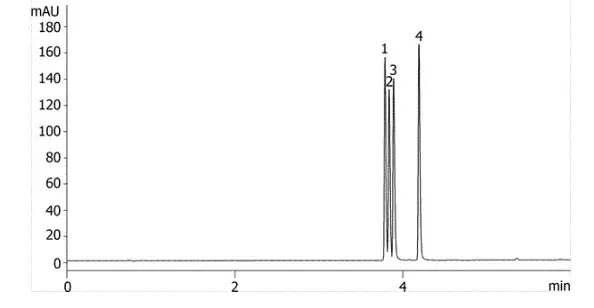
Difficult bases, amitriptyline, nortriptyline, imipramine and clomipramine run using 0.1% formic acid as an additive on a positive surface charge C18.