
Humanity in Science: Combating Counterfeit with Capillary Electrophoresis
The Humanity in Science Awardwas created in 2015 by Phenomenex and The Analytical Scientist to recognize outstanding developments in science that could change human lives for the better.
The inaugural winners, Peter H. Seeberger and Andreas Seidel Morgenstern of the Max Planck Institutes in Germany, claimed top prize last year with their discovery of acost-efficient process to produce artemisinin-based anti-malarial therapies>—a highly effective, but commonly counterfeited, treatment for a disease that claims over half a million lives every year.
There were many runners-up who did (and do!) amazing things for humanity. Recently, The Analytical Scientist sat down with each of them to catch up, and find out how their ventures have progressed in the last 12 months.
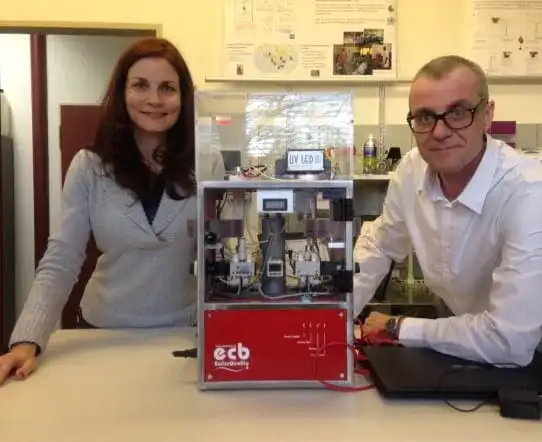
Serge Rudaz and Julie Schappler Detecting pharmaceutical counterfeit with capillary electrophoresis
“Our project focused on the development of a low-cost capillary electrophoresis (CE) system for counterfeit medicine evaluation in emerging countries,” Rudaz detailed, highlighting three major justifications for the technique: it’s cost effective, there’s no solvent constriction, and it’s easy to manage.

Rudaz
CE refers to a family of electrokinetic separation techniques. According to UC Davis’ analytical chemistry wiki, CE separates ions based on their electrophoretic mobility with the use of an applied voltage.
“The electrophoretic mobility is dependent upon the charge of the molecule, the viscosity, and the atom’s radius,” the site explained. “The rate at which the particle moves is directly proportional to the applied electric field—the greater the field strength, the faster the mobility.”

Schappler
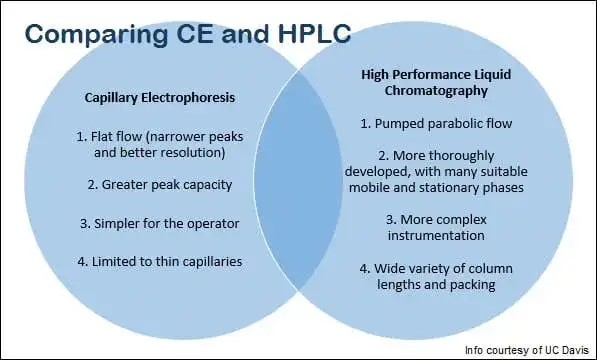
The diagram below examines CE in comparison to High Performance Liquid Chromatography (HPLC):
The Centers for Disease Control and Prevention (CDC) reported that 10 to 30 percent of medicines sold in developing countries are counterfeit. In 2014, the World Health Organization (WHO) issued an alert concerning three separate fraudulent antimalarial medications in west and central Africa—a problem being addressed by 2015 Humanity in Science Award winners Seeberger and Morgenstern.
“None of the medicines were manufactured by the companies named on the labels,” the bulletin stated. “Two of the medicines contain less than 2% of the active pharmaceutical ingredient.”
It’s been one year since Sudaz and Schappler vied for the accolade, but their work is just getting started. “After the award, we had lots of ideas, but we needed to make them concrete,” Schappler told the publication. “We also needed to handle specific issues in Africa. [F]or example, there are problems with data integration that make it difficult to identify the location of counterfeit drugs.” The pair are working on a “smartphone kind of device” that will merge laypeople into their endeavor, so “patients themselves can help to tackle counterfeit drugs.”
Related resources: