Application Specific Sample Preparation Solutions
Sample Preparation
Accurate, high-sensitivity analysis begins long before injection. Application-specific sample preparation is critical for isolating target analytes, reducing matrix interferences, and ensuring consistent, reproducible results, especially for LC/MS workflows operating at trace levels. Phenomenex application-specific sample preparation solutions are designed for researchers, analysts, and method developers who require reliable performance across pharmaceutical, biotech, environmental, food, and academic laboratories.
One of the primary challenges in LC/MS analysis is managing matrix effects caused by co-extracted sample components. These interferences can alter analyte ionization efficiency, resulting in ion suppression or ion enhancement. Effective sample preparation minimizes these effects, helping ensure accurate, reproducible quantitation and improved method performance.
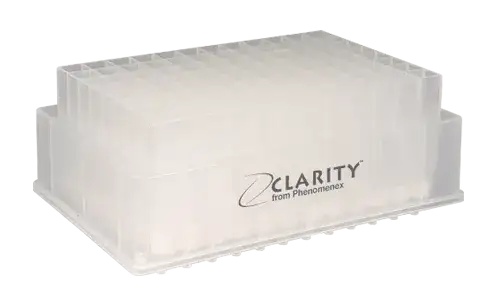

Beta-Glucuronidase Removal
An SPE-based solution designed to efficiently remove beta-glucuronidase from enzymatic hydrolysis samples, improving analyte stability and LC-MS accuracy mixtures.

Glycans Biozen N-Glycan
Specialized SPE cleanup designed to enhance glycan recovery and profiling, ensuring accurate structural characterization in biotherapeutic development.
Peptides & Monoclonal Antibodies
Magnetic bead technology for high-purity peptide and mAb purification, delivering consistent recovery for bioanalytical and biopharmaceutical workflows.

Oligonucleotides
A solid-phase extraction (SPE) solution tailored for selective oligonucleotide extraction, desalting, and purification to enhance downstream analysis.

Protein Precipitation
A rapid protein precipitation solution that removes unwanted proteins, reducing sample complexity and improving LC-MS method robustness.

Protein Precipitation & Phospholipid Removal
A dual-function sample prep solution that combines protein precipitation with phospholipid removal, reducing ion suppression for improved LC-MS sensitivity.

PFAS Extraction
Optimized workflow for PFAS extraction, providing high-purity sample cleanup for food and environmental testing applications.

Pesticides
Pre-formulated QuEChERS kits designed for efficient pesticide extraction from food and environmental matrices, ensuring high recoveries and minimal matrix interferences.

Extractable Petroleum Hydrocarbons (EPHs)
A solid-phase extraction solution designed to isolate EPHs from environmental samples, supporting regulatory compliance in hydrocarbon analysis.
Organic Acid Removal
Originally developed for unreacted organic acid removal, this SPE solution ensures cleaner extracts and improved method performance across various applications.
Polycyclic Aromatic Hydrocarbons (PAHs)
An SPE method optimized for the extraction of PAHs from natural water samples, effectively removing humic acid interferences.

Drugs of Abuse
SPE cartridges designed for forensic and clinical applications, providing selective extraction and cleanup of basic and neutral drugs from biological matrices.
Rather than relying on generic cleanup approaches, these solutions are tailored to specific analytes, chemical classes, and sample matrices. Phenomenex helps simplify method development while improving analyte recovery, extract cleanliness, assay robustness, and quantitative reproducibility by aligning sorbent chemistry, format, and workflow to your application. The result is a streamlined sample preparation process that supports robust quantitation, helps reduce matrix effects and improve quantitative performance for LC/MS workflows.
From complex biological matrices to challenging environmental and food samples, Phenomenex provides application-focused workflows that integrate seamlessly with downstream chromatography and mass spectrometry. These solutions are built to reduce variability, shorten preparation time, and enable scalable, reproducible methods, whether you’re optimizing a new assay or running high-throughput routine analysis.
Learn more about Phenomenex Sample preparation solutions designed to deliver cleaner extracts, higher recovery, and dependable results across diverse analytical applications.
Considerations for Sample Preparation
Effective sample preparation requires careful planning and a clear understanding of the analytical goal, sample matrix, and detection technique. Selecting the right workflow directly impacts analyte recovery, extract purity, method reproducibility, and overall LC/MS performance. Inadequate sample cleanup can lead to ion suppression or enhancement, poor sensitivity, reduced column lifetime, and inconsistent results.
Sample preparation workflows should balance analyte recovery with matrix removal. Maximizing recovery alone may not provide optimal quantitative performance if matrix components remain in the extract and negatively impact detector response or instrument robustness.
Application-specific sample preparation addresses these challenges by matching extraction and cleanup strategies to the chemical properties of the target analytes and matrix components. Factors such as polarity, pKa, molecular weight, hydrophobicity, charge state, analyte stability, and concentration range should guide the selection of sample preparation strategies, Biological samples may contain proteins, phospholipids, salts, and endogenous metabolites, while food and environmental samples often contain fats, pigments, and humic substances that can interfere with analytical performance. Optimized workflows help ensure efficient analyte retention and elution while minimizing co-extracted interferences.
Consistency is equally critical. Reproducible sample preparation reduces method variability and supports reliable quantitation across batches, analysts, and laboratories. Purpose-built workflows also improve laboratory efficiency by reducing method development time and minimizing rework caused by poor recoveries or matrix effects.
For a deeper understanding of best practices, explore Sample Preparation Techniques for Precision in Analysis and why Sample Preparation Critical in Analytical Chemistry remains a foundational step in modern analytical workflows.