Solid Phase Extraction (SPE) Columns & Cartridges
What Is Solid Phase Extraction (SPE)?
Solid Phase Extraction (SPE) is a sample preparation extractive technique used in laboratories to clean-up, solvent switch, and concentrate samples prior to analysis, particularly with methods like high-performance liquid chromatography (HPLC) or gas chromatography (GC). Solid phase extraction is essential for getting specific separations in complex mixtures by isolating target analytes while removing unwanted contaminants, which helps achieve more accurate and precise analytical results.
Phenomenex offers advanced sample preparation with its wide selection of SPE products, engineered for exceptional reliability and precision in analytical testing.
Phenomenex’s SPE products, with their targeted selectivity and robust capabilities, are crucial in producing cleaner samples to reduce interferences and premature column failure. This, in turn, significantly improves the accuracy and precision of HPLC and GC analyses, making them indispensable tools for achieving high-quality analytical results.
Overview
How Does Solid Phase Extraction Work?
Solid phase extraction is a highly effective method utilized in chromatography for preparing samples for further analysis. It involves multiple steps designed to isolate specific analytes from complex or dirty mixtures, resulting in cleaner, more concentrated samples, and suitable for accurate analysis. The process is straightforward, following a sequence of steps: condition, equilibrate, load, wash, and elute. Each step is essential in ensuring targeted selectivity, versatility, and can be used in conjunction with automation to ensure further optimization, but some types of sorbents may require additional steps or even fewer steps for a clean sample.
Standard SPE Protocol:
Benefits of Using Solid Phase Extraction
The principles of solid phase extraction, a fundamental technique in sample preparation, revolve around selectively isolating specific analytes, making SPE a crucial step in many laboratory workflows. Here are the key benefits of using SPE:
- Targeted Selectivity: The principles of solid phase extraction emphasize the ability to retain and isolate specific analytes from complex mixtures selectively. By using a solid phase extraction cartridge, SPE ensures that the compounds of interest are captured while impurities and unwanted substances are effectively removed. This targeted selectivity leads to cleaner samples, which is essential for accurate and reliable analytical results.
- Versatility: SPE is highly versatile and can be applied to various sample types, viscosities, and volumes. Solid phase extraction cartridges are available in multiple tube or 96-well plate sizes with variable sorbent volumes to accommodate different needs, whether working with small biological samples or large environmental matrices. This versatility allows SPE to be used across various industries, including pharmaceuticals, environmental testing, food safety, and many others.
- Easy Automation: SPE is well-suited for automation, allowing for the streamlined processing of numerous samples with minimal manual intervention. Automated SPE systems use solid phase extraction cartridges or 96-well plates to handle large sample batches quickly and consistently, making SPE an ideal choice for high-throughput laboratories where speed and accuracy are essential. Automation includes the use of additional equipment or robots that are programmed for specific product measurements and protocols.
Phenomenex SPE Cartridges
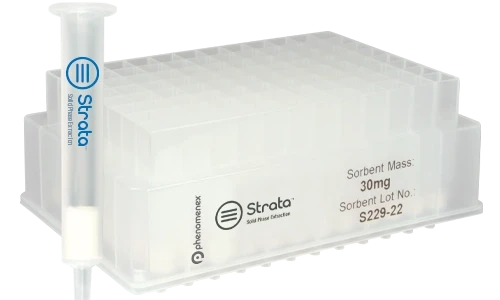
Cartridges, often referred to as tubes, are small, cylindrical containers filled with a specific type of SPE sorbent material used to capture, retain, and isolate target analytes from a sample. Phenomenex SPE cartridges stand out for their high performance and consistency in delivering clean, concentrated samples ready for analysis. They come in a variety of volumes, even going up to 150 mL Giga Tubes for large volume formats.
Smaller tubes are often used for limited sample volumes typically seen in clinical and pharmaceutical applications. On the other hand, larger cartridges and Giga tubes are commonly used in environmental and food applications, where higher sample volumes need to be processed.
For different sample sizes, Phenomenex offers several types of solid phase extraction cartridges, each tailored to specific sample preparation needs. Here’s an overview of some of the most popular options:
Strata™ SPE is a silica-based sorbent platform engineered for reliable clean-up and concentration across a wide range of analytes. The line includes normal-phase, reversed-phase, ion-exchange, and specialty chemistries, giving users flexible options for diverse sample preparation needs.
Strata solid phase extraction cartridges are available in multiple formats including 1, 3, and 6 mL tubes and large-volume Giga Tubes (12–150 mL)—making them suitable for workflows ranging from small biological samples to large environmental extractions.
Designed for consistent retention and strong recoveries, Strata is a dependable choice for routine purification, method development, and application-specific workflows.
Strata-X PRO combines polymeric sorbent technology with advanced matrix removal features, enabling rapid and effective cleanup of analytes. These cartridges are designed for high-throughput environments and allow for a streamlined, 2- or 3-step SPE process. Strata-X PRO is particularly beneficial for laboratories dealing with challenging sample matrices, where quick and thorough extraction is essential. They are available in tubes, 96-well plates, Giga tubes, and 96-well microelution plates.
Phenomenex also offers 96-well plates designed for high-throughput laboratories where rapid and efficient sample processing is essential. These plates enable the simultaneous extraction of multiple samples, making them ideal for clinical, pharmaceutical, and bioanalytical applications.
Why Choose Phenomenex Solid Phase Extraction Cartridges?
Phenomenex SPE cartridges stand out for their high performance and consistency in delivering clean, concentrated samples ready for analysis. These cartridges are engineered to ensure optimal interaction between the analytes and the sorbent, maximizing recovery rates while minimizing the presence of unwanted contaminants. Whether dealing with small-volume biological or large-scale environmental samples, Phenomenex provides a solid phase extraction cartridge solution tailored to your needs.
In addition to their superior performance, Phenomenex solid phase extraction cartridges are designed for ease of use, supporting manual and automated workflows. This flexibility makes them a preferred choice in laboratories requiring reliable, reproducible results across various applications. Using Phenomenex SPE cartridges, laboratories can achieve high-quality solid phase extraction, ensuring precise and accurate outcomes in their analytical processes.
Learn more in our Complete Guide to Solid Phase Extraction (SPE).
FAQs
What is the solid phase extraction method?
The solid phase extraction (SPE) method is a sample preparation technique that isolates and concentrates target analytes from complex mixtures by passing the sample through a solid sorbent material. This material retains the analytes while removing matrix impurities, enhancing the accuracy and precision of subsequent analytical analyses.
What are the benefits of solid phase extraction?Solid phase extraction (SPE) offers targeted selectivity for isolating analytes, ensuring cleaner samples by removing unwanted contaminants. It is versatile for handling various sample volumes and can be easily automated for high-throughput processing, enhancing both efficiency and accuracy in analytical workflows.
How do I choose a solid phase extraction?
Choosing a solid phase extraction method involves selecting the appropriate sorbent material and cartridge format based on the specific requirements of your sample and analytes. Consider factors such as the nature of your sample matrix, the target analytes' chemical properties, desired sensitivity, and the volume of samples to be processed. Additionally, assess whether you need manual or automated processing and the compatibility of the SPE method with your analytical instrumentation.