Liquid Chromatography Formats & Techniques
What Are LC Formats & Techniques?
Liquid chromatography is one of the foundations of modern analytical workflows, enabling precise separation and quantification across pharmaceuticals, biologics, food, environmental, and academic research.
The physical configuration of the column can come in many different dimensions, otherwise referred to as LC formats: HPLC, UHPLC, microbore, prep, and others, each optimized for a specific scale or performance requirement. The separation mode itself can also be called the LC technique: examples being reversed-phase (RP), normal-phase (NP), chiral, HILIC, ion-exchange (IEX), and size exclusion (SEC).
Understanding formats and techniques can help researchers choose a suitable liquid chromatography technique for their sample type, matrix complexity, and performance goals.
Types of LC Formats
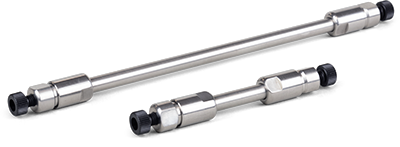
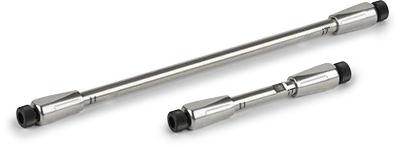
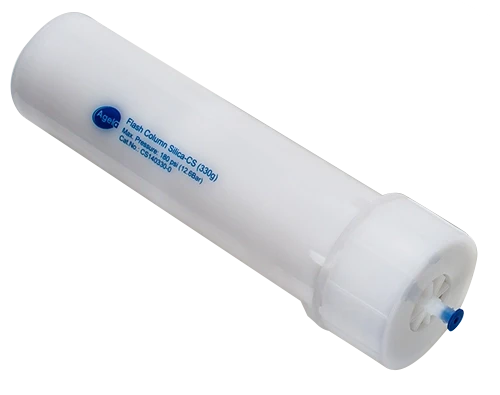
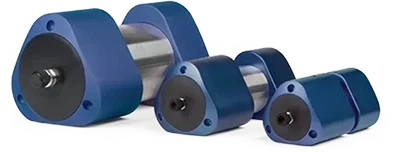
LC formats vary in diameter, length, and hardware design, allowing users to tailor performance to sensitivity, throughput, and scale. HPLC columns support routine quantification, while UHPLC formats deliver faster run times and sharper peaks for high-throughput workflows. Micro and nano LC boost sensitivity for low-abundance analytes, including peptides and trace-level contaminants. Flash, semi-prep, and Preparative formats support purification and scale-up in discovery and manufacturing, while bulk media offer scalable purification for manufacturing and process workflows.
Choosing the right format ensures the chromatographic system aligns with pressure capabilities, sample mass, runtime requirements, and the desired level of resolution.
Chromatography Techniques Supported
Phenomenex supports a full suite of liquid chromatography techniques designed to meet diverse analytical demands.
How to Choose the Right LC Format
Selecting the right LC format begins with understanding system-pressure limits, detector requirements, and desired throughput. For high-speed methods, UHPLC minimizes run time without compromising resolution. When sensitivity is critical, micro or nano LC maximizes signal for trace-level quantification. For purification or fraction isolation, preparative LC provides the scale and loading capacity needed for downstream use.
Phenomenex LC Technologies & Innovations
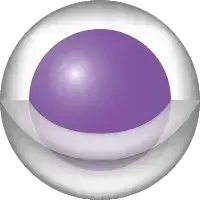
Core-Shell
Designed with a solid core surrounded by a porous shell, providing high efficiency and resolution by reducing band broadening.
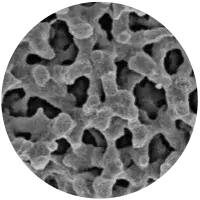
Monolith
Comprising a continuous porous network, monoliths enable fast flow rates and high throughput, making them suitable for rapid analyses.
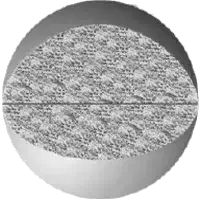
Fully Porous
With a uniform porous structure, these particles offer a high surface area, enhancing analyte interaction and separation capacity.

Polymer
Constructed from chemically stable polymers, these particles are versatile and suitable for a wide range of applications, including those requiring specific chemical compatibilities.
Phenomenex offers a comprehensive portfolio of LC technologies engineered to elevate method performance, robustness, and productivity across industries. Our flagship platforms, including Kinetex®, Luna® Omega, Synergi™, Gemini®, and BioZen®, deliver advanced particle engineering, optimized surface chemistries, and reproducible lot-to-lot results. These solutions support a wide range of LC techniques, from high-throughput RPLC to demanding HILIC, IEX, and SEC workflows.
For both HPLC and UHPLC users, Kinetex® Core-Shell Technology provides sharper peaks and reduced solvent consumption. Luna Omega offers fully porous sorbents for complex matrices requiring ruggedness and increased retention. BioZen® columns are purpose-built for biologics, enabling confident characterization of peptides, intact proteins, glycoforms, and aggregates using multiple LC modes.
Our solutions are designed not just to meet analytical challenges, but to help labs innovate with confidence. Whether you’re improving an existing method or developing a new workflow, Phenomenex delivers the performance, support, and technical expertise to keep your chromatography moving forward.