Analytical LC Columns
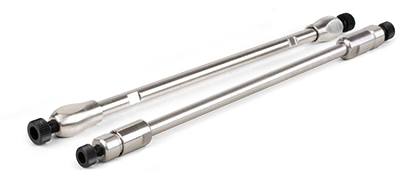
An analytical column in LC is the core of your separation workflow. It drives retention, selectivity, and resolution. Analytical LC columns deliver reliable peak shapes and consistent performance. This gives you the confidence needed for accurate identification and quantitation.
These columns come in a wide range of dimensions, particle technologies, and bonded phases. You can easily match your method to your analytes, whether you’re working with small molecules, peptides, or complex biomatrices. Each column is engineered for stability and repeatability. Every run delivers dependable results.
From micro and UHPLC to standard-bore and everywhere in between, our selection of LC column formats makes it easy to run your methods on any instrument.
Biological Analysis
Small Molecule Analysis
All Analytical Brands
Analytical Column Types
Analytical LC columns come in a wide range of chemistries. They support everything from routine assays to highly selective, application-specific separations.
- C18 analytical columns are the leading choice for reversed-phase (RP) methods. They offer strong retention and reliable performance across pharmaceutical, environmental, food, and general small-molecule workflows.
- Orthogonal RP options, such as C8, phenyl, and polar-enhanced phases, add the selectivity needed for co-eluting or structurally similar compounds.
- For charge-based separations, ion-exchange (IEX) columns provide high-resolution profiling of peptides, proteins, and charged metabolites.
- Highly polar analytes benefit from hydrophilic interaction liquid chromatography (HILIC) phases. These phases improve retention and response when RP does not deliver.
- For large molecules, analytical size exclusion chromatography (SEC) columns offer gentle non-denaturing, size-based separations ideal for proteins, aggregates, and polymers.
This broad suite of column types ensures you can find the right fit for your analytes. It supports a wide range of matrix challenges and regulatory needs. It gives you consistent performance, no matter how complex the method.
How to Choose an Analytical LC Column
Start with your analytes and the separation mechanism:
- Identify the compounds you’re separating and their physicochemical properties.
- Use C18 or C8 for most small molecules.
- Choose HILIC for highly polar compounds.
- Select SEC or IEX for proteins, aggregates, or charged species.
Match the column dimensions to your workflow:
- 2.1 mm ID columns reduce solvent use and increase sensitivity.
- 3.0–4.6 mm ID formats provide added robustness for routine QC or high-throughput methods.
- Shorter columns support faster runs.
- Longer columns offer higher efficiency and peak capacity.
Consider particle size and morphology:
- Sub-2 µm and core-shell particles deliver fast, high-efficiency separations.
- 3–5 µm particles offer rugged performance on standard HPLC systems.
Evaluate surface chemistry and bonded-phase design:
- Carbon load, end-capping, pore size, and phase density all impact retention and peak shape.
- These factors are critical when analyzing acids, bases, or highly hydrophobic compounds.
Check mobile-phase and pH compatibility:
- Ensure your column can handle the solvents, buffers, and pH range of your method.
- A well-matched column provides stable retention, high resolution, and long-term durability, regardless of sample complexity.
FAQs
What is the difference between analytical and preparative LC columns?
Analytical columns are designed to separate and measure compounds within a mixture, supporting identification, characterization, and quantitation with high resolution on small sample amounts. Preparative columns, by contrast, are used to extract and purify target compounds from a mixture, isolating milligram-to-gram quantities for downstream use. In short, analytical columns focus on analysis, while preparative columns focus on isolation and recovery.
How long do LC columns last?
Column lifetime depends on sample cleanliness, mobile-phase conditions, and operating pressures. With proper filtration and optimized method conditions, analytical columns can deliver hundreds to thousands of injections with consistent performance.
Can I use the same LC column for different types of analyses?
Columns can often support similar analyte classes, but mixing drastically different sample types may lead to carryover or shifts in retention. For regulated or high-precision assays, dedicated columns ensure maximum consistency and reliability.