
Clarity Oligo-RP

A Sensitive Solution for Oligo Characterization and Bioanalysis

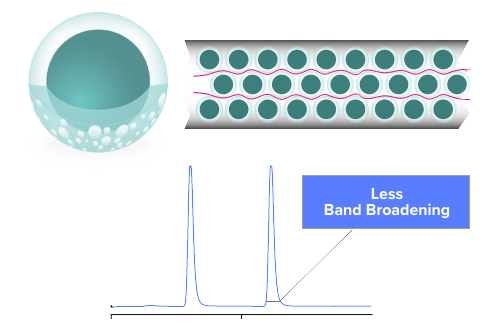
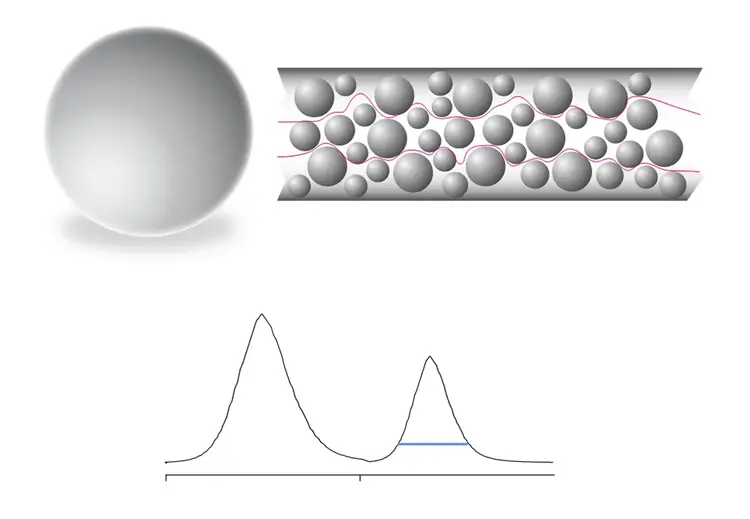
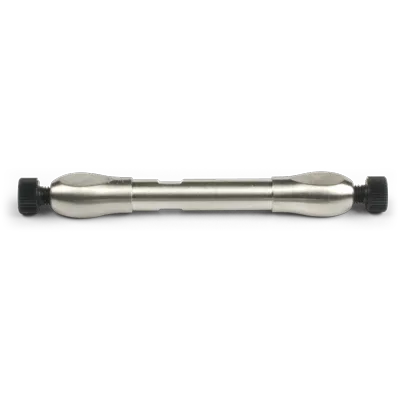
Unlike traditional fully porous oligo columns, Clarity Oligo-XT relies on the power of core-shell technology to provide extremely high efficiencies for both low and high oligo concentrations. Because the Clarity Oligo-XT particle is not fully porous, analytes spend less time diffusing into and out of the pores as they travel through the column, resulting in less band broadening for higher peak efficiencies, making Clarity Oligo-XT a great choice for analyses that require sensitivity such as oligo characterization and oligo analysis from bioanalytical samples.

Recommended Use
Rapid, high efficiency RP-LC-MS from purification to characterization
Particle Size
1.7, 2.6, 5
Recommended Use
Rapid, high efficiency RP-LC-MS from purification to characterization

Order

Select Attributes:

Internal Diameter (mm)

2.1

4.6

10

21.2

30

Length (mm)

50

100

150

250

Particle Size (µm)

1.7

2.6

5

Showing 1-5 of 16 Results
$879.00 USD (EA)

Sign In

$2,125.00 USD (EA)

Sign In

$1,139.00 USD (EA)

Sign In

$1,139.00 USD (EA)

Sign In

$1,275.00 USD (EA)

Sign In

LC-MS Analysis

Oligo-XT

An increased need for TK and PK/PD studies for oligo therapeutics has lead to an increase in LC-MS/MS analysis because of the specificity, sensitivity, and shorter method development times as compared to ligand binding assays or ELISA. Because sensitivity is of the utmost importance, it is crucial to select an LC column that provides both separation and high efficiencies to ensure accurate results.

Clarity Core-Shell

Conventional Fully Porous

The Core-Shell Advantage

Unlike traditional fully porous oligo columns, Clarity Oligo-XT relies on the power of core-shell technology to provide extremely high efficiencies for both low and high oligo concentrations. Because the Clarity Oligo-XT particle is not fully porous, analytes spend less time diffusing into and out of the pores as they travel through the column, resulting in less band broadening for higher peak efficiencies.

Clarity Oligo-XT is patented by Phenomenex. U.S. Patent No. 7,563,367 and 8,658,038 and foreign counterparts.
*May not be representative of all applications.

Sensitive, Reliable Analysis

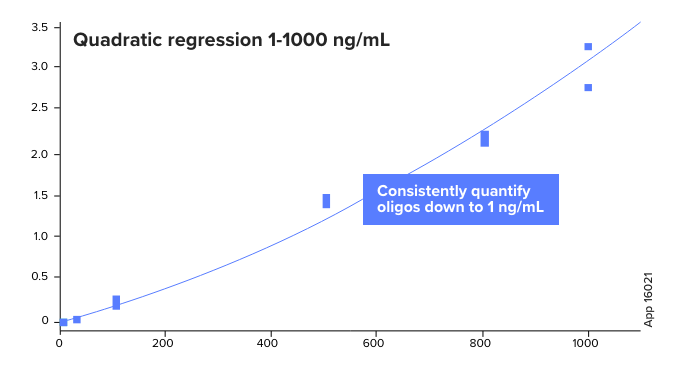
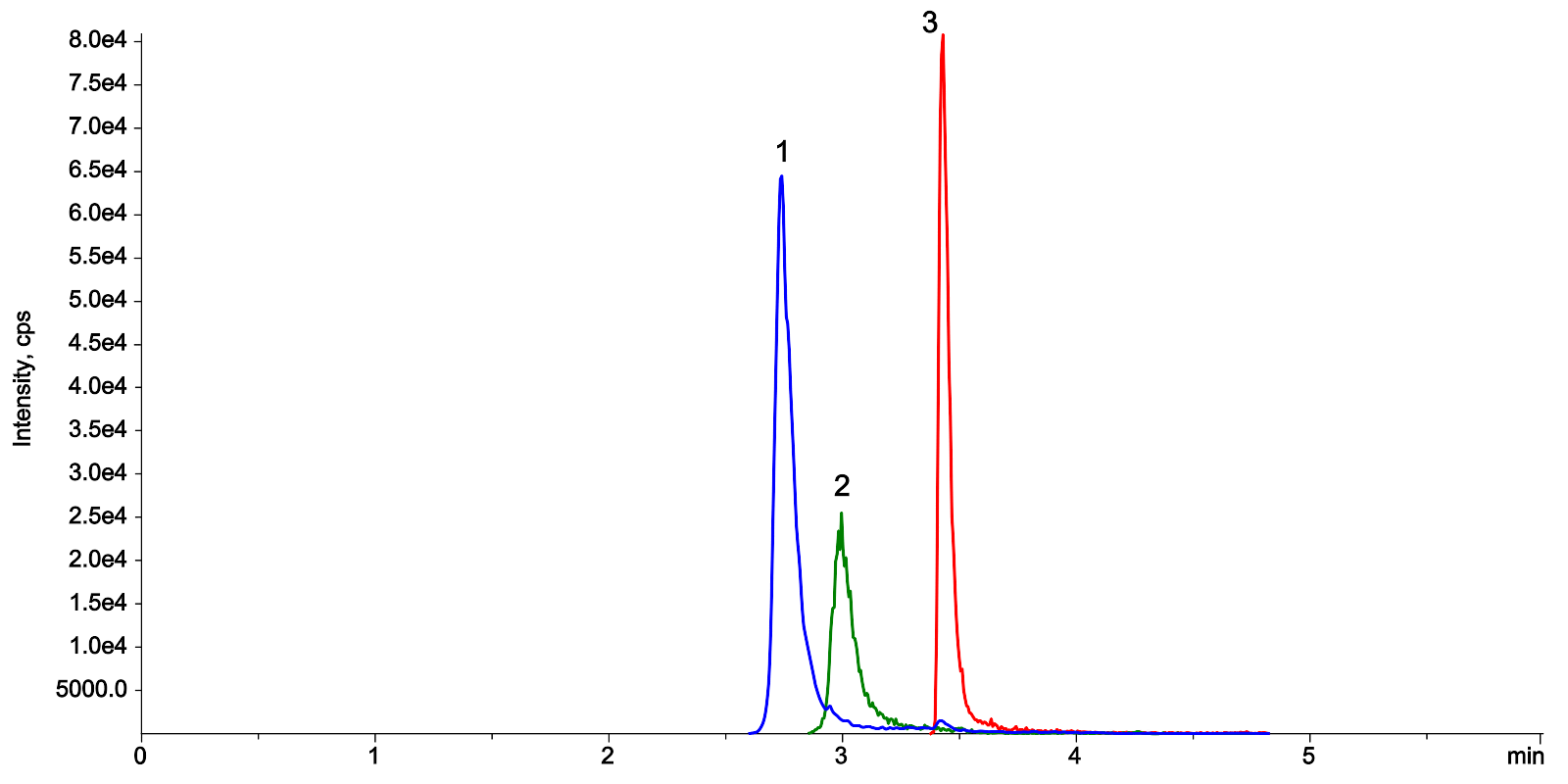
Calibration curve of BNA in mini pig liver homogenate

Column:

Clarity 5 μm Oligo-XT

Dimension:

50 x 2.1 mm

Flow Rate:

500 μL/min

Temperature:

40 ˚C

Detection:

Thermo Q Exactive™ Hybrid Quadrupole-Orbitrap™Mass Spectrometer, HESI, negative polarity

Detection:

Thermo Q Exactive™ Hybrid Quadrupole-Orbitrap™Mass Spectrometer, HESI, negative polarity

Mobile Phase:

A: 1.0 % HFIP & 0.1 % DIEA with 10 μM EDTA in Methanol, B: 1.0 % HFIP & 0.1 % DIEA with 10 μM EDTA in Methanol / Water (50:50 v/v)

Part No.:

00B-4745-AN

HPLC System:

Shimadzu® Nexera® X2 UHPLC

Injection Volume:

10 μL

Gradient:

Time (min)

% B

0.530
2.560
3.0100
3.5100
4.030
5.030

FAQS

The void volume corresponds to the amount of mobile phase in an LC system. In most separation modes the void volume would be equivalent to the amount of mobile phase needed to elute a compound that doesn't interact with the stationary phase and is hence unretained. In size exclusion, analytes are not separated based on chemical interactions with the stationary phase but rather their ability, based on size, to enter pores in the stationary phase. Therefore, in size exclusion the terms total permeation and total exclusion volume have greater significance than void volume. The total permeation volume corresponds to the amount of mobile phase in the system, including that in the pores of the stationary phase, whereas the total exclusion volume does not include the mobile phase within the pores of the stationary phase. Consequently, the total permeation volume corresponds to the amount of mobile phase needed to elute a compound that is small enough to completely enter into the stationary phase pores and the total exclusion volume is the amount of mobile phase needed to elute a compound that is entirely excluded from the stationary phase pores.
Typically ion-pairing reagents are used to increase the retention and resolution of oligo’s separated by reversed-phase HPLC. High molarity amounts (100 mM triethylamine acetate [TEAA]) are typically added when analyzing oligonucleotides, however the high level of TEAA leads to ion suppression that makes MS detection of oligonucleotides difficult at therapeutic and reagent concentrations. With LCMS we recommend hexafluoroisopropanol (HFIP) as a mobile-phase additive which has enabled reasonable sensitivity by MS. Our standard recommendation is 100mM HFIP and 4mM TEA in both A and B of a gradient mixture however more recent studies have shown some oligonucleotides work well even at concentrations as low as 10mM HFIP.
The alkylamine used directly affects retention time, with longer chains leading to increased retention, e.g. hexylamine will show longer retention times than triethylamine. There is also a difference in solubility so generally gradients need to be adjusted to allow for this. Generally, the effect of ion-pair is oligo-specific; for example, Gapmers longer amines offer better resolution whereas for siRNA shorter amines offer an improvement in resolution
Phosphorothioate (PS) can frequently desulfurize in to Phosphodiester (PO) and can result in reduced recoveries during solid phase extraction and sample clean-up step. To abstain PS in oxidizing back to PO we can add anti-oxidants like Cysteine in to the loading buffers. For e.g. in Clarity OTX Loading / Lysis buffer add approx. 1gm Cysteine in 1L bottle of the buffer.