




Documents
Supporting Docs
Lux Chiral Column Equivalency FlyerBrochures
The Chiral NotebookSupporting Docs
Frequently Asked Questions for UHPLC/HPLCSupporting Docs
Meeting All Your PREP NeedsSupporting Docs
Meeting All Your SFC NeedsChoose a country/region to see content specific to your location



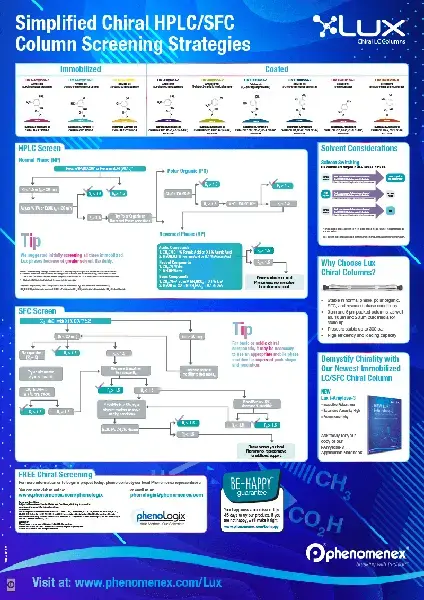
Lux Chiral LC columns help you handle chiral separations for analytical and preparative work. They work across many solvent conditions. You can choose from a broad range of chiral selectors for normal phase, reversed phase, polar organic, and SFC methods. For samples with one chiral center, Lux supports strong normal phase separations. For analytes with multiple chiral centers, Lux i-Cellulose-5 can improve enantiomer and diastereomer separation. You can also review column sizes, target compound classes, and product literature for method development, transfer, storage, and method switching.

The Lux family of amylose and cellulose chiral selectors provides a variety of complementary selectivities that allows you to screen for the most effective enantiomeric separation under reversed phase, polar organic, normal phase, and SFC conditions.
Why choose Lux Chiral Columns

Select a Phase to view products:
Chiral
AMP
Amylose-1
Cellulose-1
Cellulose-2
Cellulose-3
Cellulose-4
i-Amylose-1
i-Amylose-3
i-Cellulose-5
No Separation Mode
No Phase
Select your ideal Lux phase based on type of separation or workflow
Lux immobilized chiral stationary phases provide complementary but distinct enantioselectivity for a wide range of chirality. In addition, the immobilization process allows for the use of a wide range of mobile phases and strong solvents compatibility
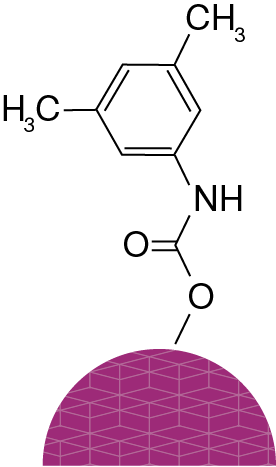
Amylose tris (3,5-dimethylphenylcarbamate) Guaranteed Alternative to CHIRALPAK IA and IA-3
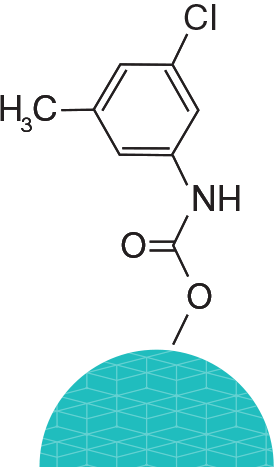
Amylose tris (3-chloro-5-methylphenylcarbamate) Guaranteed alternative to CHIRALPAK IG and IG-3
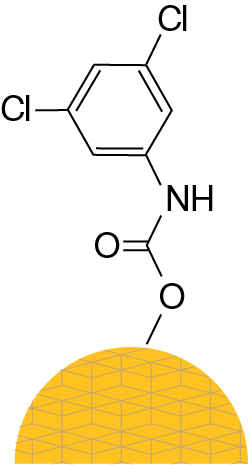
Cellulose tris (3,5-dichlorophenylcarbamate) Guaranteed alternative to CHIRALPAK IC and IC-3
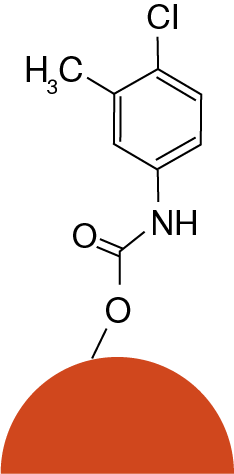
Cellulose tris (4-chloro-3-methylphenylcarbamate) Guaranteed alternative to CHIRALCEL OX-H, OX-3, OX-RH, and OX-3R
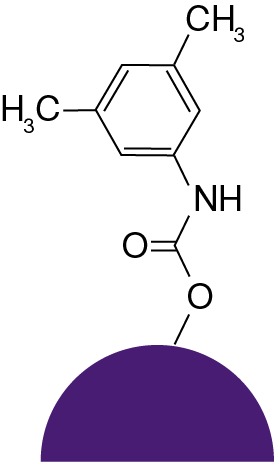
Amylose tris (3,5-dimethylphenylcarbamate) Guaranteed alternative to CHIRALPAK AD, AD-H , AD-3, AD-RH, and AD-3R
Cellulose tris (3,5-dimethylphenylcarbamate) Guaranteed alternative to CHIRALCEL , OD, OD-H, , OD-3, OD-RH , and OD-3R
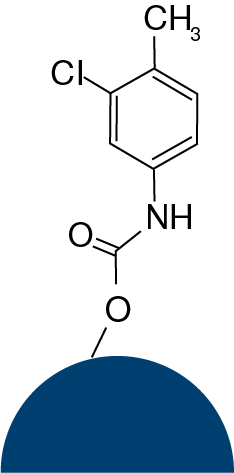
Cellulose tris (3-chloro-4-methylphenylcarbamate) CHIRALCEL OZ, OZ-H , OZ-3, OZ-RH, and OZ-3R
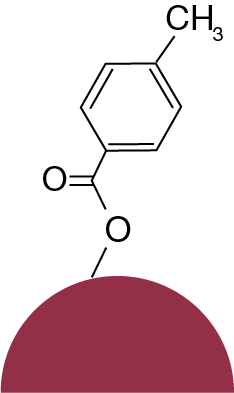
Cellulose tris (4-methylbenzoate) CHIRALCEL OZ, OZ-H , OZ-3, OZ-RH, and OZ-3R

Proprietary chiral column chemistry to separate substituted amphetamines
Recommended Use
Rapid and accurate chiral separation of methamphetamine and amphetamine.
Particle Size
3 µm
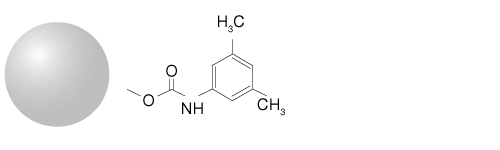
Amylose tris(3,5-dimethylphenylcarbamate)
Recommended Use
Separation of enantiomers and racemic mixtures by reversed phase, normal phase, polar organic and SFC with a fully porous particle, coated with a polysaccharide stationary phase.
Particle Size
5 µm, 3 µm

Cellulose tris (3,5-dimethylphenylcarbamate)
Recommended Use
Separation of enantiomers and racemic mixtures by reversed phase, normal phase, polar organic and SFC with a fully porous particle, coated with a polysaccharide stationary phase.
Particle Size
5 µm, 3 µm
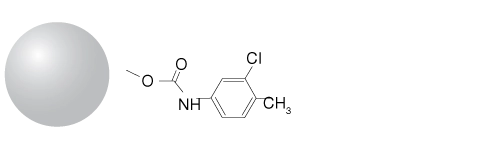
Cellulose tris (3-chloro-4-methylphenylcarbamate)
Recommended Use
Separation of enantiomers and racemic mixtures by reversed phase, normal phase, polar organic and SFC with a fully porous particle, coated with a polysaccharide stationary phase.
Particle Size
5 µm, 3 µm

Cellulose tris(4-methylbenzoate)
Recommended Use
Separation of enantiomers and racemic mixtures by reversed phase, normal phase, polar organic and SFC with a fully porous particle, coated with a polysaccharide stationary phase.
Particle Size
5 µm, 3 µm

Cellulose tris (4-chloro-3-methylphenylcarbamate)
Recommended Use
Separation of enantiomers and racemic mixtures by reversed phase, normal phase, polar organic and SFC with a fully porous particle, coated with a polysaccharide stationary phase.
Particle Size
5 µm, 3 µm
Amylose tris(3,5-dimethylphenylcarbamate)
Recommended Use
Separation of enantiomers and racemic mixtures by reversed phase, normal phase, polar organic and SFC with a fully porous particle, immobilized with a polysaccharide stationary phase. This Immobilization provides additional strong organic solvent ruggedness so that DCM, DMSO and other related strong solvents can be used on column.
Particle Size
5 µm
Amylose tris(3-chloro-5-methylphenylcarbamate)
Recommended Use
Separation of enantiomers and racemic mixtures with strong stability in strong organic solvents
Particle Size
5 µm, 3 µm

Cellulose tris(3,5-dichlorophenylcarbamate)
Recommended Use
Separation of enantiomers and racemic mixtures by reversed phase, normal phase, polar organic and SFC with a fully porous particle, immobilized with a polysaccharide stationary phase. This Immobilization provides additional strong organic solvent ruggedness so that DCM, DMSO and other related strong solvents can be used on column.
Particle Size
5 µm, 3 µm
Recommended Use
—