Chiral HPLC

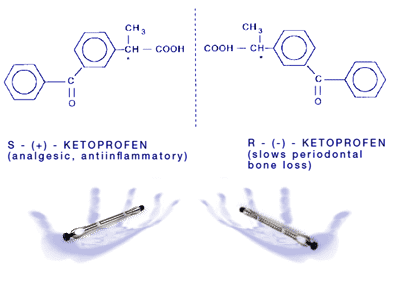
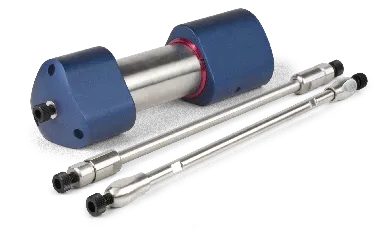
Chiral column chromatography refers to the separation of enantiomers using a chiral HPLC column, an HPLC column that is packed with a chiral stationary phase (CSP). Enantiomers are separated based on the number and type of each interaction that occurs during their exposure to the chiral stationary phase. Some chiral stationary phases (CSPs) can separate a wide range of chiral compounds, while others are useful only for specific types of chiral compounds.

Normal phase solvents are commonly used for chiral HPLC separations; however, reversed-phase solvents can also be used with certain types of chiral stationary phases. Approximately 60% of all pharmaceutical drugs are chiral. Common chiral stationary phases used for chiral HPLC columns are polysaccharide, ligand exchange, protein, helical polymers, macrocyclic, and Pirkle-brush concept.

Chiral separations are essential in industries such as pharmaceuticals, biotechnology, and natural products chemistry, where the accurate identification and purification of optically active compounds are critical. Chiral drugs require highly selective and sensitive analytical methods to ensure their safety and efficacy. Increasingly stringent government regulations are intensifying the demand for rapid, precise, and reproducible techniques to analyze and purify enantiomeric compounds.

In response to these challenges, Phenomenex’s chiral HPLC columns provide an exceptional solution, offering a unique combination of selectivity and versatility for both trace-level analysis and laboratory-scale drug purification.

Phenomenex Chiral Chromatography Columns

Phenomenex offers a comprehensive range of cutting-edge chiral columns, recognized as one of the most widely used chiral columns globally. Because with 12 distinct stationary phases, these robust chiral columns are engineered for the direct and indirect separation of a wide range of enantiomeric compounds, such as amines, alcohols, carboxylic acids, hydroxy acids, amino acids, ketones, lactones, ethers, esters, and other biologically active substances.

As a leader in advanced chiral separations, Phenomenex offers an unparalleled range of products designed to meet the diverse demands of industries requiring precise chiral analysis. Supported by a specialized chiral separation services laboratory, Phenomenex provides expert guidance in column selection, method development, and every facet of chiral chromatography. Whether researchers are creating new methods or optimizing existing ones, Phenomenex's dedication to innovation and expertise guarantees exceptional performance and reliability in chiral separations.

FAQs

To safely transfer a Lux column from normal phase to polar organic or reverse phase conditions, flush the column with methanol:ethanol 9:1 (V/V) as transition solvent at a flow rate of 0.5 mL/min. First, flush the column with at least ten column volumes (i.e. 25 mL for a 250 x 4.6 mm i.d. column or 15 mL for a 150 x4.6 mm i.d. column) to completely remove the initial mobile phase. When the column has been flushed, equilibrate the column with at least ten column volumes of the polar organic or reverse phase solvent mixture to condition the column. In addition, when the buffer salt additive of the reverse phase mobile phase is insoluble in methanol/ethanol, flush the column briefly with water before switching to the buffered mobile phase. When the column has been flushed equilibrate the column with at least ten column volumes with the reverse phase solvent mixture. To safely transfer a column from polar organic to normal phase conditions flush the column with at least ten column volumes of methanol:ethanol 9:1 (V/V) as transition solvent at a flow rate of 0.5 mL/min. When the column has been flushed with methanol/ethanol equilibrate the column with at least ten column volume of the normal phase solvent mixture to condition the column. We do not recommend switching from reverse phase mode back to normal phase mode.
No. Start with a lower flow rate than normal and pump CO2/MeOH (80/20). For example, if the method calls for 5 mL/min then start the initial flow into the column at 2-3 mL/min and gradually increase over about 20 minutes. AXIA preparative columns will require a longer ramp up to the normal flow rate (at least 30 minutes for a 21.2mm ID). The Hexane/IPA shipping solvent will be easily changed over to SFC mobile phase using this approach.
Non-compatible solvents are DMSO, DMF, DCM, Acetone, THF, Ethyl acetate and any solvent capable of dissolving the polysaccharide derivative.
While both form helical structures that are maintained in coating, the amylose can be described as more tightly coiled. The looser cellulose helical structure may more readily accommodate enantiomer interaction. Practically, this results in different selectivity even if the same chiral selector is substituted, as the 3-dimensional orientation around the CSP will differ.
Both Rezex ROA and RHM columns are packed with the same stationary phase. However, the difference between the two columns is that ROA is QC tested under acidic conditions and the RHM is QC tested under neutral conditions. ROA is tested under acidic conditions as the intended analysis is for organic acids, which will be neutral under acidic conditions (e.g. 5mM H2SO4 Buffer)
Lux columns are interchangeable between normal phase, polar organic, reversed phase, and SFC modes. Additionally, while Lux columns were designed for chiral separations they can be used under the same separation modes as well as HILIC for achiral separations.
To safely transfer a column from normal phase to SFC, we recommend conditioning directly to 80:20 CO2:co-solvent (typically methanol) at a low pressure, increasing as the pressure stabilizes. You may also start with 100% CO2, considering the small amount of isopropanol (10%) in the shipping solvent is enough to overcome any concerns of straight CO2 displacement of straight hexane. 80:20 CO2:methanol is the equilibration solvent we use in our independent SFC analyses.
To switch a Lux column from SFC back to LC mode you need to run a gradient up to 100% of the co-solvent which was previously used in SFC mode. Once the column is in 100% co-solvent you can introduce the polar organic solvents to it. Particular attention should be paid to the back pressure when introducing solvents again into the Lux column to ensure you exceed the maximum pressure stability of the column
Make up a 1 Liter solution of 5 mM Ammonium Bicarbonate and mix well. Transfer to a larger flask or beaker and follow the procedure. The solution will easily get to pH 9 with a small amount of concentrated Ammonium Hydroxide. In order to get to pH 11 you should expect to add an amount of concentrated Ammonium Hydroxide around 5-10% of the total volume of your solution. For example if you were to make a 1 Liter solution of 5 mM Ammonium Bicarbonate then expect to add as much as 50-100 mL of concentrated Ammonium Hydroxide.
This is quite a challenge as many of the products that we use, including our solvents, reagents, glassware, sample prep, and LC instrumentation can have PFAS background. Some general tips are to clean all equipment prior to, and after each use, make sure your reagent water, solvents such as methanol and ammonium hydroxide, are as PFAS free as possible. You may have to inquire from your vendor for details or if they can have some guarantee on background levels. There can also be PFAS in disposable plastics such as pipette tips and filters. Some methods recommend baking glassware, deterrent washing and rinsing with clean water, and proper storage for air drying. You can also implement a pre-rinse procedure using methanol with 0.1% ammonium hydroxide, toluene, and methanol. If you are using automated sample preparation, rinse the system with the same solvents. The LC pump should have a delay column between the pump and the autosampler as Teflon seals are common in LC systems. It’s advisable to review validated method guidance which often provide more detail on dealing with interferences within your lab, your system, and also within samples.