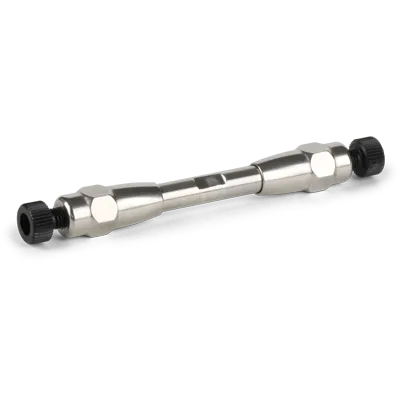

Kinetex Core-Shell Biphenyl HPLC Columns

Enhanced Polar and Aromatic Selectivity

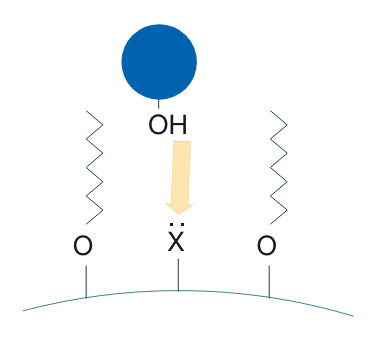
Kinetex Biphenyl is a high-efficiency core-shell product capable of adding extra separation power to your analysis of non-polar and polar compounds. Take advantage of multiple selectivity interaction mechanisms such as hydrophobic, pi-pi, and dipole-dipole to improve tough separations.

  • Compatible with All Analytical HPLC/UHPLC Systems*
  • Orthogonal Selectivity to C18 Phase
  • 100 % Aqueous Mobile Phases Stable
  • USP: L11

*Kinetex analytical columns are compatible with all LC system with standard LC column end-fittings threaded in 10-32. Please contact us at Phenomenex.com/chat for any questions and information about fitting compatibility and any other column internal diameters.

Particle Size
1.7, 2.6, 5
Recommended Use
100 % aqueous stable reversed phase chemistry with hydrophobic, aromatic, and enhanced polar selectivity

Order

Select Attributes:

Pore Size (Å)

100

Internal Diameter (mm)

0.3

0.5

1

2.1

3

4

4.6

10

21.2

30

50

Length (mm)

20

30

50

100

150

250

Particle Size (µm)

1.7

2.6

5

Showing 1-5 of 40 Results
$905.00 USD (Ea)

Sign In

$686.00 USD (Ea)

Sign In

$1,154.00 USD (Ea)

Sign In

$987.00 USD (Ea)

Sign In

$987.00 USD (Ea)

Sign In

Overview

Novel Selectivity For Tough Separations

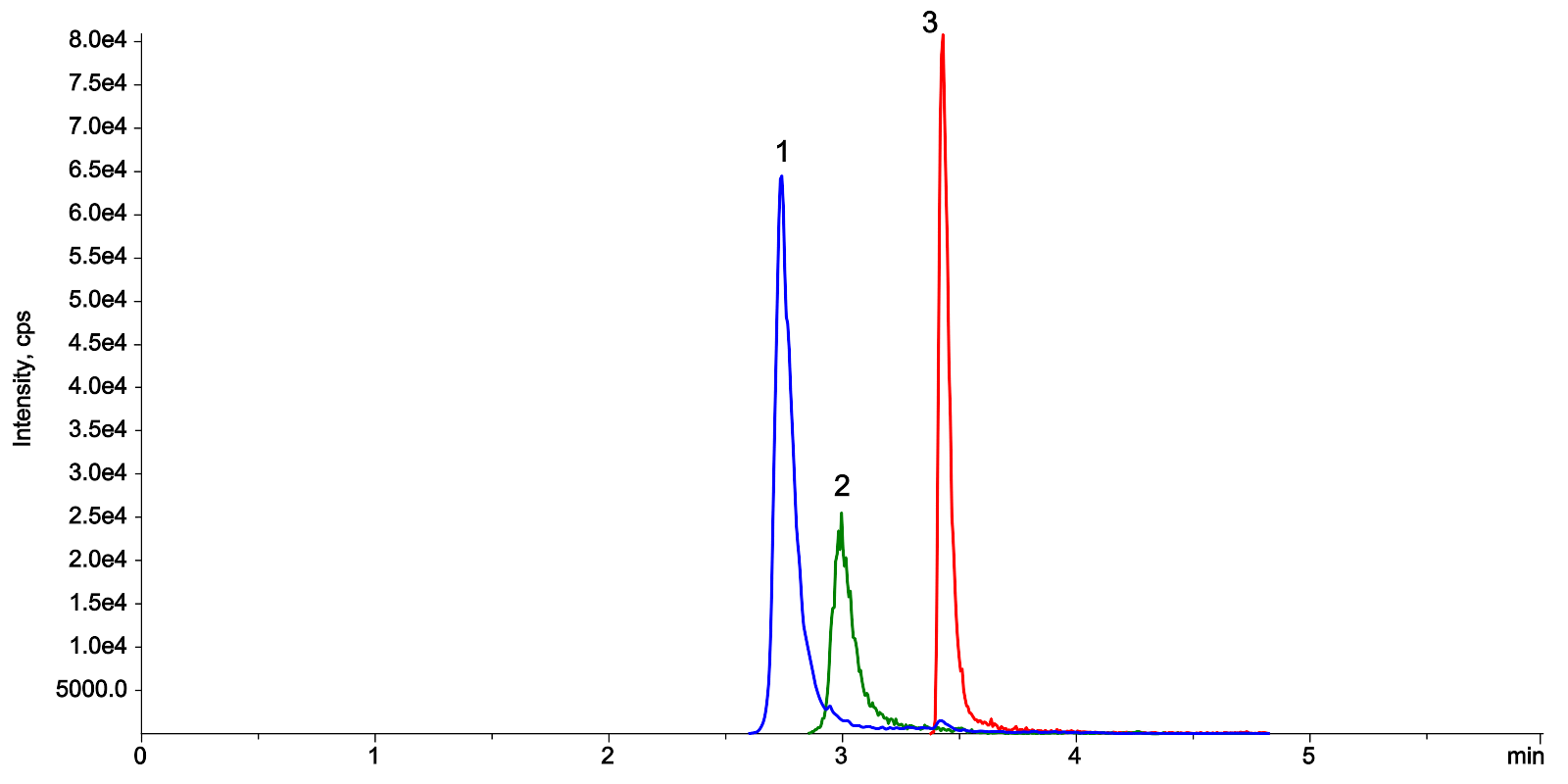
Think high performance‚ enhanced retention‚ and the ability to go where a traditional C18 can’t. The Kinetex Biphenyl offers the high performance benefits of a core-shell particle with a unique stationary phase capable of becoming the go-to selectivity for reversed phase method development. Use Kinetex Biphenyl columns to get enhanced retention‚ higher sensitivity‚ and overall better results;
especially for aromatic compounds.

Aromatic Selectivity

Compounds with aromatic ring structures offer a specific type of selectivity associated with pi-pi bond interaction. The compound’s aromaticity provides pi electrons that have the potential to interact with pi bonds, which can be found on phenyl based stationary phases. This provides a unique, orthogonal selectivity compared to a traditional C18 phase.

Conditions for all columns:

Column:

Kinetex 1.7 µm Biphenyl

Dimension:

50 x 2.1 mm

Flow Rate:

0.5 mL/min

Temperature:

40 ˚C

Detection:

MS/MS (Sciex® API 4000™) (ambient)

Mobile Phase:

A: Water with 0.1 % Formic Acid, B: Acetonitrile with 0.1 % Formic Acid

Part No.:

00B-4628-AN

Injection Volume:

10 μL

Gradient : Time (min)

% B

05
4100
5100
75

Sample:

Drugs of Abuse

Increased Separation of Aromatic Compounds

Using a Biphenyl Phase

The elution order of analytes can change depending upon the predominate selectivity characteristics of a HPLC or UHPLC column and the utilized mobile phase. Therefore, by altering the stationary phase or mobile phase conditions, we can observe a unique elution order and extend retention of more polar analytes.

Aromatic Compound Comparison

Conditions for all columns:

Columns:

Kinetex 1.7 µm C18
Kinetex 1.7 µm Biphenyl

Dimension:

50 x 2.1 mm

Flow Rate:

400 µL/min

Temperature:

50 ˚C

Detection:

MS/MS (Sciex API 4000™) (ambient)

Mobile Phase:

A: Water with 0.1 % Formic Acid, B: Methanol with 0.1 % Formic Acid

Part No.:

00B-4628-AN, 00B-4475-AN

Injection Volume:

10 μL

Backpressure:

450 Bar

Gradient : Time (min)

% B

010
4100
4.110

Sample:

1. Morphine
2. Hydromorphone

FAQs

DNA, RNA, miRNA, siRNA, phosphorothioates, LNA, single stranded, duplexed, and encapsulated oligonucleotides. As long as there is a phosphodiester or phosphorothioate backbone the extraction protocol should provide excellent clean-up and recovery
Due to the polar nature of phenyl phases they can be used under 100% aqueous mobile phases without the user being concerned about phase collapse.
Kinetex phenylhexyl is best suited to the separation of aromatic compounds which are relatively hydrophobic. It can also be used as an alternate selectivity to a C8 or C18, retaining compounds to a similar extend compared to a C8, but with the additional pi-pi interations allowing for aromatic positional isomers to be separated. Kinetex biphenyl is more applicable to polar aromatic compounds, and will also offer a good degree of shape selectivity. Kinetex F5 is the most polar phenyl phase, due to it's highly polar nature and the interactions it can undergo with analytes it is the best option for analyzing highly polar analytes, and those compounds which differ in terms of pi electron structure.
In general, a column with polar selectivity, such as Synergi Fusion-RP or Kinetex Biphenyl, will preform well for pesticide/herbicide screens using LC/MS/MS.