









What Catnip is Made of and Why it Can Make Your Cat Seem High
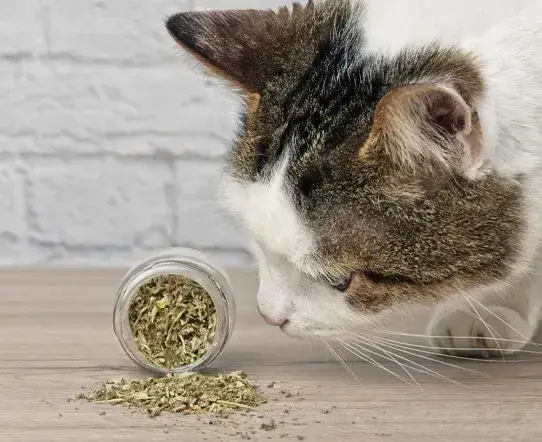

Explore the chemical compounds that go into why cats go crazy for catnip
Cats, from our domestic familiars to big cats like lions and tigers are susceptible to an oil found in the leaves and stems of Nepeta cataria, or the catnip plant. Rolling around, flipping over, and being generally hyperactive are several common behaviors that are exhibited by felines that smell catnip. But what exactly is in it that makes cats go bonkers?
The active chemical compound ingredient that attracts and effects your cat is Nepetalactone. Since it is concentrated in the leaves and stems, it is common to find cats gnawing on the plant to release more of the oil. Nepetalactone triggers a sense of euphoria in the brain of the susceptible cat, which produces the “high” that is sometimes described as similar to either marijuana or LSD in humans. The response to catnip typically lasts for about 10 minutes before wearing off.
The peculiar thing about catnip is that the behaviors described above only occur when a cat smells the oil. When it is eaten, it acts as a sedative and many researchers believe it is because the oil mimics feline pheromones and is triggering those receptors. However, not all cats feel the effects of catnip. About 70 to 80 percent of cats seem to be affected and the behavioral reactions of catnip vary between individuals. It is thought that sensitivity, or lack thereof, to catnip is hereditary.
Catnip isn’t just for cats either. Nepeta cataria is also known to help humans and has been used for its sedative properties for centuries. It has similar properties to chamomile and is also a very potent mosquito repellent. Luckily, cats cannot overdose on catnip, but that doesn’t mean you don’t want to know if what your cat is rolling around in is safe for them.
If detection of chemical compounds in your pet’s nip, toys, and food is of interest to you and your next application, check out these resources:
Analysis of FAMEs in Salmon Oil and Pet Food
Zebron ZB-5MSplus GC Columns
Extraction of Melamine From Pet Food
Author


Subscribe
Stay updated! Enter your email address to subscribe to Science Unfiltered for new blog alerts.

Contact the Editor
blog@phenomenex.comShare


You may also be interested in

Zen in Your Lab with Lotus Flower Origami
Origami has shown to bring peace and harmony into a person's life. So, try our new lotus origami challenge and make sure to post a picture to social!

5 Fun and Easy Activities to Do This Fall
Try fun and easy fall science experiments for kids at home, designed to make learning engaging with simple, hands-on educational activities.

The Science Behind Champagne Bubbles: What Makes Them Pop
Discover the science of champagne bubbles, the history, and how you can get the most out of your sparkling wine this New Year's Eve!